Book Review: Where the Earth Meets the Sky

September 6th, 2026

[forthcoming in the Lund Barnacle]

Louise Blight’s recently published book, Where the Earth Meets the Sky: A Story of Penguins, People, and Place in Antarctica https://www.simonandschuster.com/authors/Louise-K-Blight/243376424 is an enthralling read or audiobook listen.

It came to my attention via an unexpected email from its author two years ago recalling her summers’ attendance at Lund Farm Day Camp in 1973 and 1974. That led to an exchange revealing that Louise lived for a while in the first house on the boardwalk later replaced by Nancy’s Bakery. Afterwards she attended UVic, earned a PhD in wildlife and conservation biology and began a distinguished research scientist’s career that included a three months’residence in a hut on Ross Island in Antarctica.

The book about that residence is distinguished by the author’s accomplished writing style, ranging from lyrical descriptions of crystalline landscapes to graphic reports of pissing and shitting into containers that have to be stored and shipped off-continent to avoid contaminating the pristine environment. Another of its themes is coming to terms with grief attendant upon the untimely deaths of her father and sister. Framing her narrative is an impassioned commitment to the scientific effort to document, understand and reduce the ongoing catastrophe of human-caused climate change.

The book is notable for its detailed accounts of rigorous scientific practice, of the lives of Adelie penguins—at times cute and at others brutal– and their neighboring predators, the fierce leopard seals and skua gulls, of the other-worldly beauty, starkness and violence of its topography and weather, of the historical and present-day society of its human inhabitants, and of the ordeals and exaltations her sojourn provided.

I think those accounts can have special resonance with life at the other end of the road in Lund, which Louise reported she’d recently passed through on the way to a research expedition censusing gull and cormorant populations in Desolation Sound.

Many international reviews and appreciations of the book are available through the publisher’s website, but the Lund connection is further significant because of another personal encounter  converging on the seventies daycamp. During a brief visit in late August 2026 my wife Jan and I were introduced in the pub by Peter Uhlmann to his colleague and local resident Evan Adams, film star and Chief Medical Officer of the First Nations Health Authority. It took just a few moments to discover that he too attended the camp along with his sister Maureen and Elsie Paul’s daughter, Marlane, at ages 7 and 8. I found a scanned photo in my phone of them swimming in Sliammon Lake during a field trip. Further correspondence determined that Louise Blight and Marlane were part of the same extended social group during high school.

And here’s a reason to include all this local gossip.  Sandy Dunlop, the editor, said I could write a review of Louise’s book for The Barnacle of about 500 words. To get started, I thought I’d check out what Google’s Gemini would come up with, and in five seconds it produced an informative, accurate review that could have saved me time and effort and confirmed my fear that the human brain is becoming obsolete. But then I realized that AI could not yet replace the particulars of experience, memory and community.

Lund 2026

September 5th, 2026

Thursday August 20

After a multiple year absence from Lund induced by a wish to travel to new places abroad and also to the  need to distance ourselves since having sold Knoll House, in early summer we decided to return to there, though only for a brief visit.

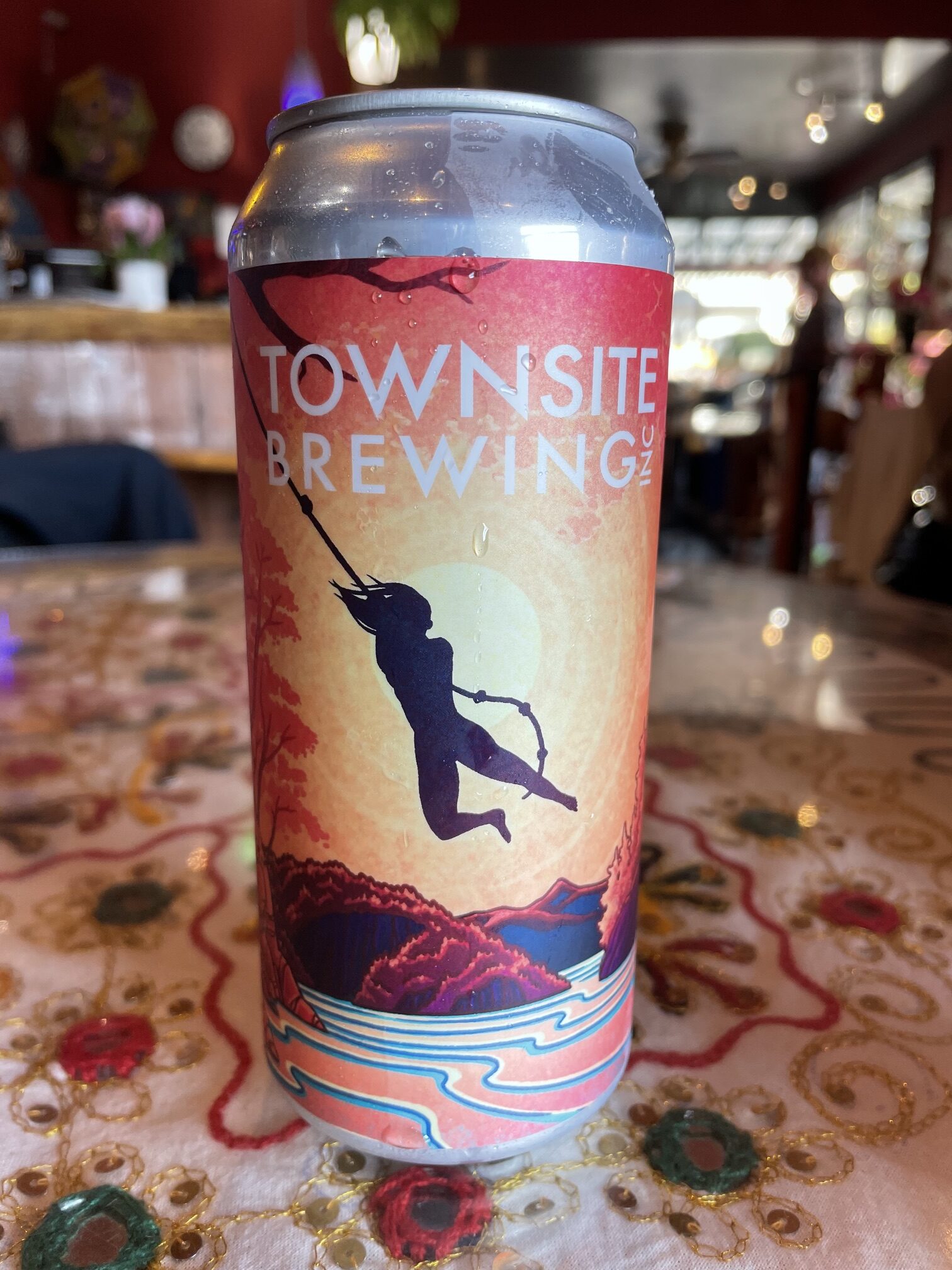
The lengthy journey began at the SLO airport where we learned that its first leg, to San Francisco, was indefinitely delayed. We were rerouted to LA, where the flight to Vancouver was also delayed, threatening a missed connection to the last leg from Vancouver to Powell River.  Despite the spectacular views from the small Pacific Coastal plane, rather than eager, I was apprehensive about how I would feel and  we’d be received at our destination. I decided to elevate my mood with microdoses of a gummy for the rest of the trip. Upon arrival we connected amiably with the car rental agent who knows Tai and Theo. Things warmed up further during a delicious meal at the Indian restaurant across from the Mill, including a can of Zunga beer brewed down the street.

We couldnt meet Sandy, the editor of the Barnacle as planned because she was just recovering from a bad fall which left her hospitalized and recuperating far south of town.

The AirBandB rental cabin perched on a cliff above Lund delivered its promise of elegance, privacy, a hot tub, magnificent views and a 138 step staircase down to the water.
9AE87835-5C33-42EA-A4C7-5FB0F61F691F_1_105_c

B58D5CC7-2FD6-46AE-84ED-21A6C0A67609_1_105_c

Friday August 21 Read the rest of this entry »

Happy Birthday!

May 4th, 2026

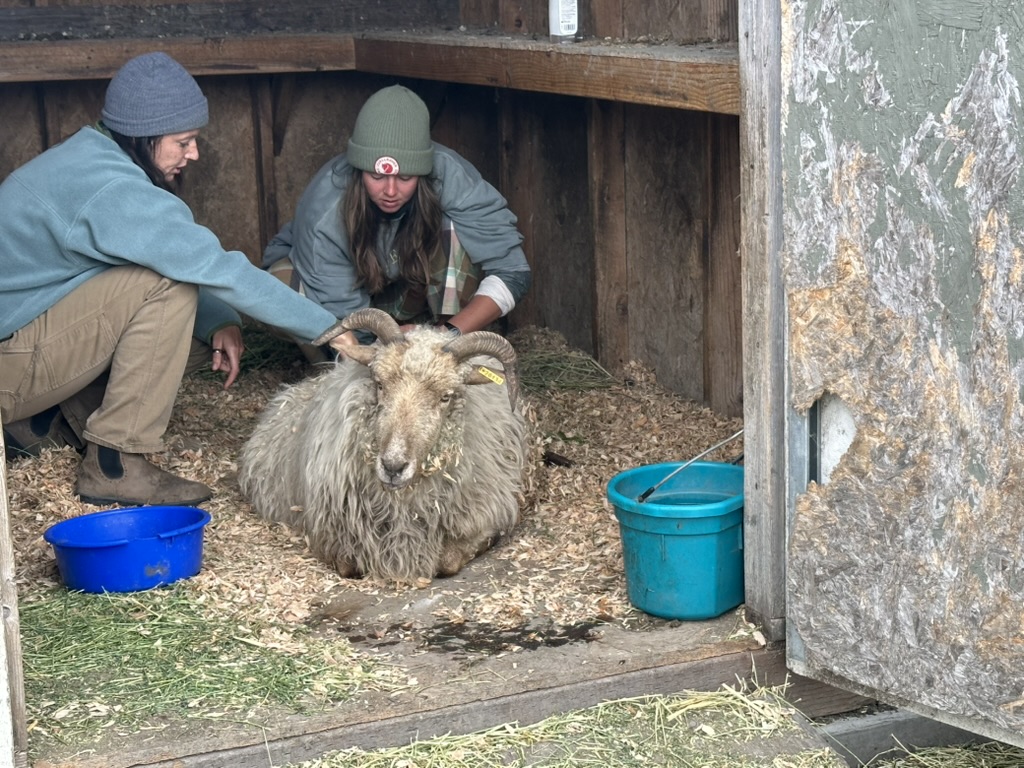
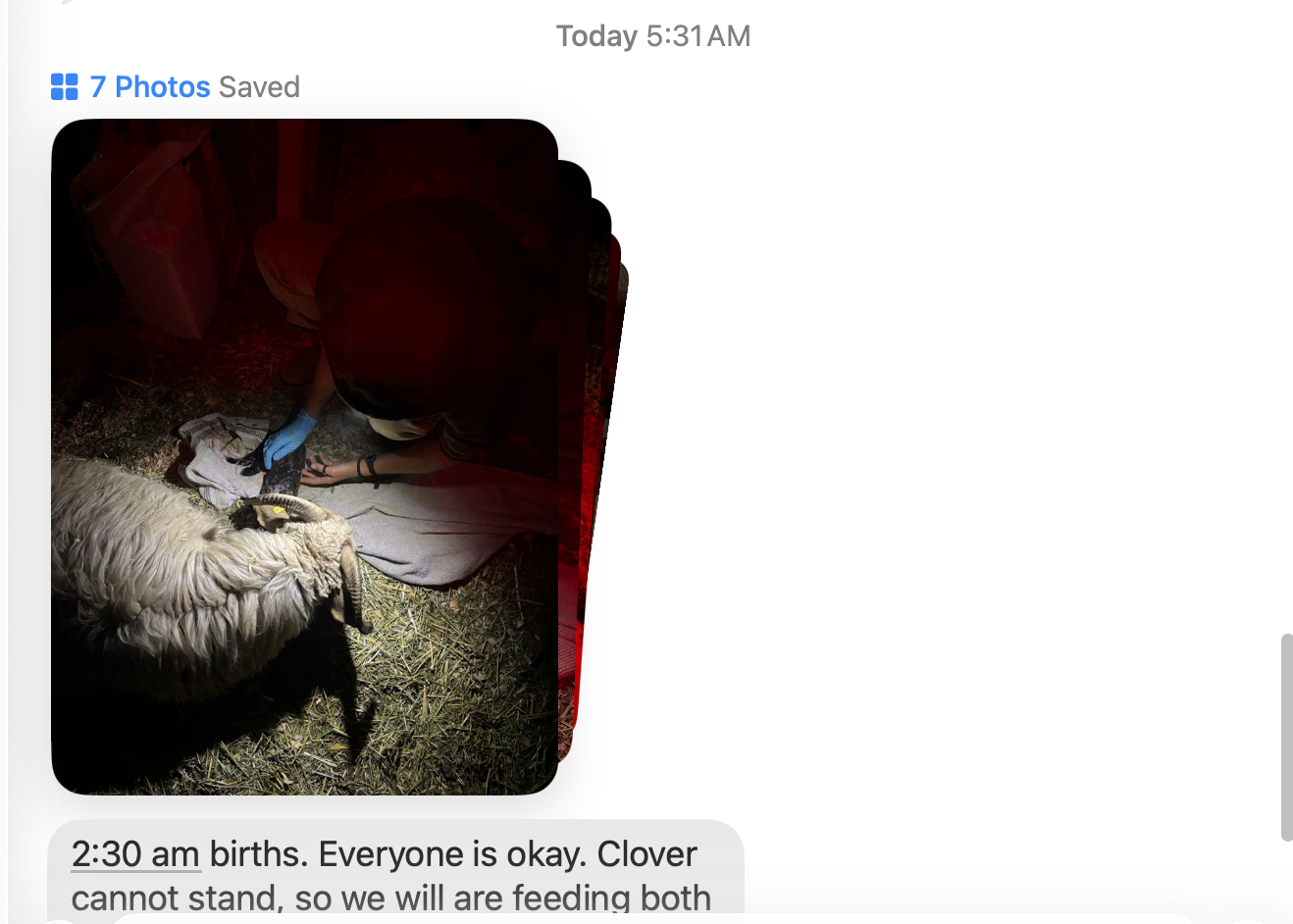
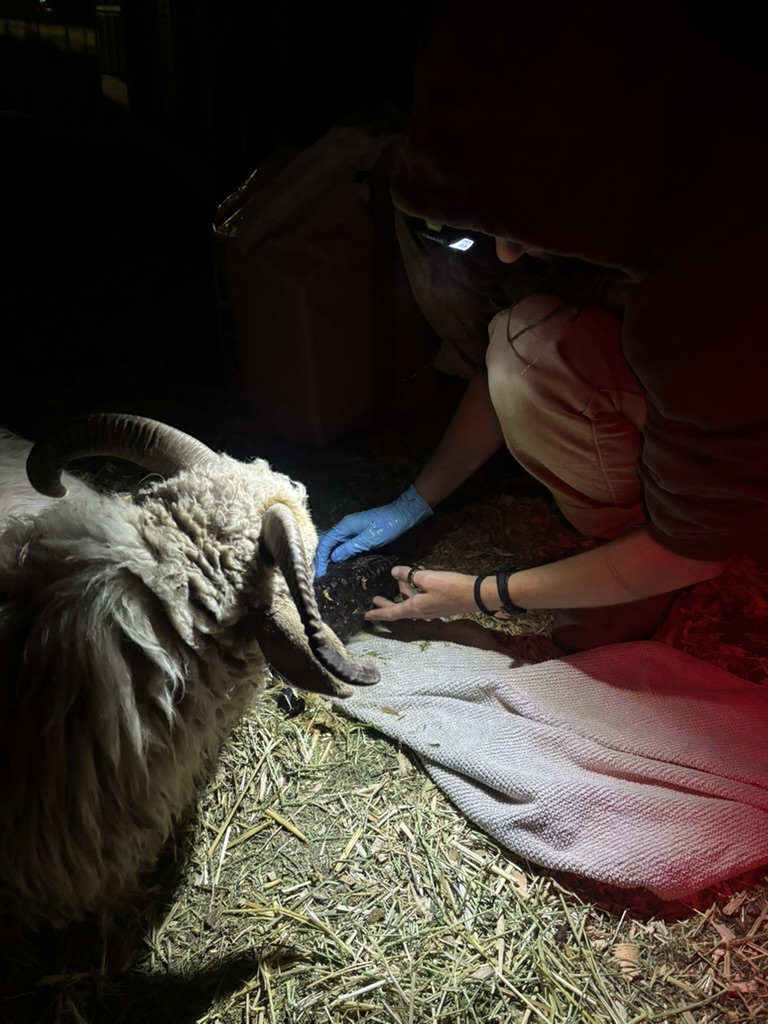
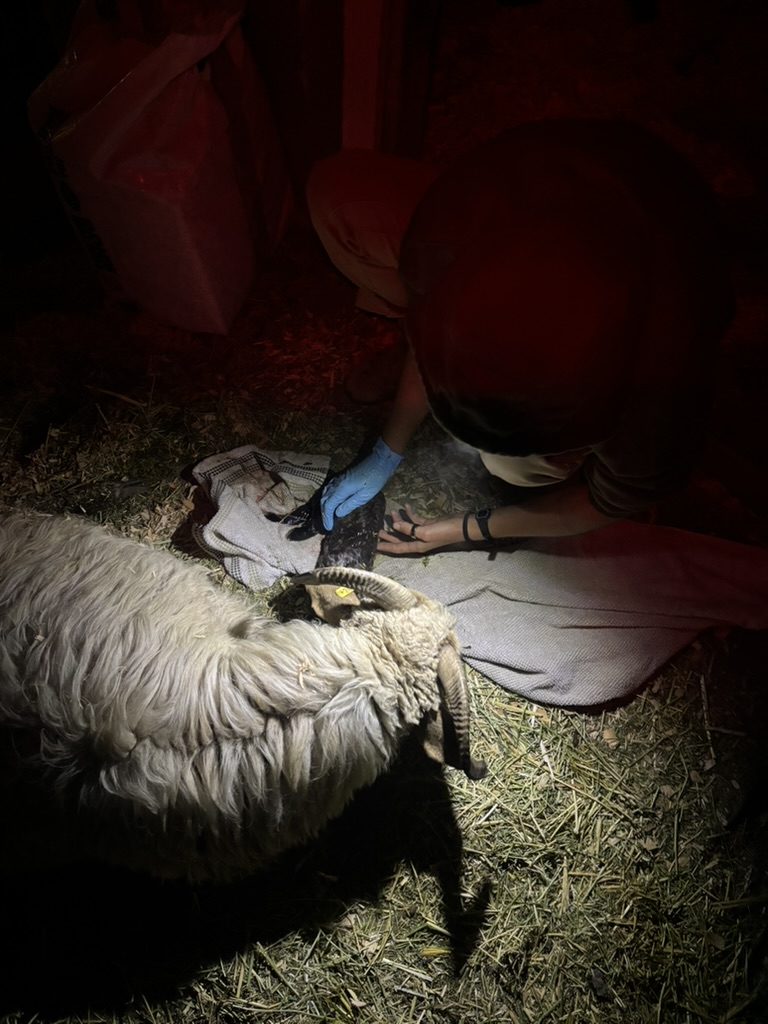
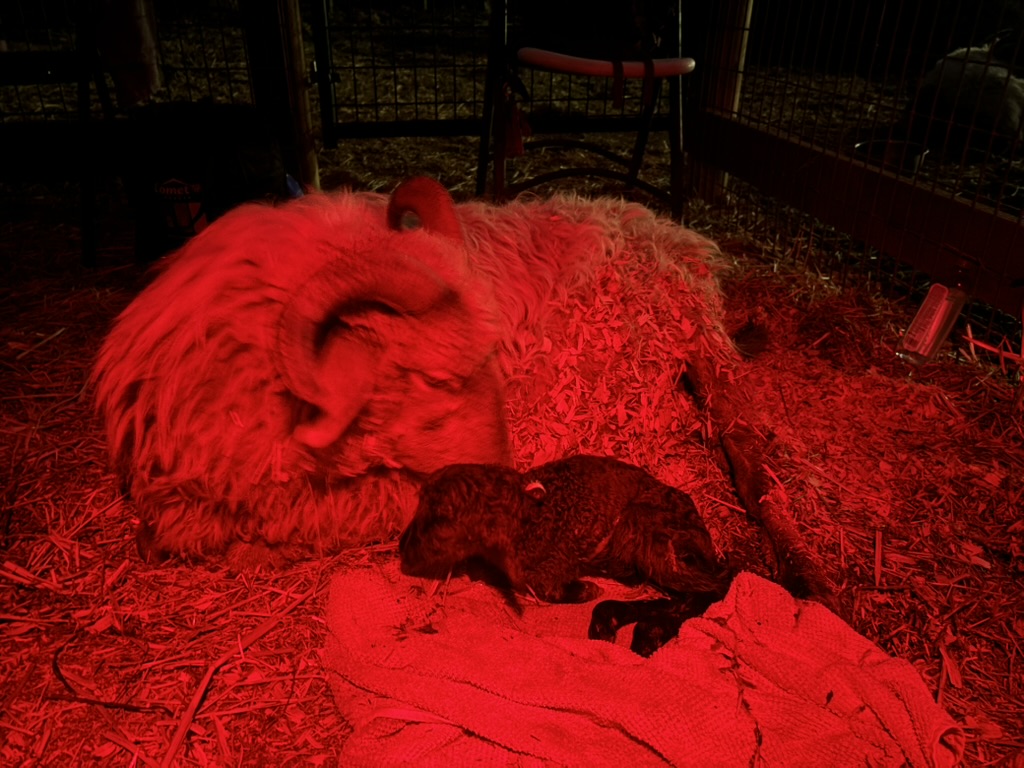
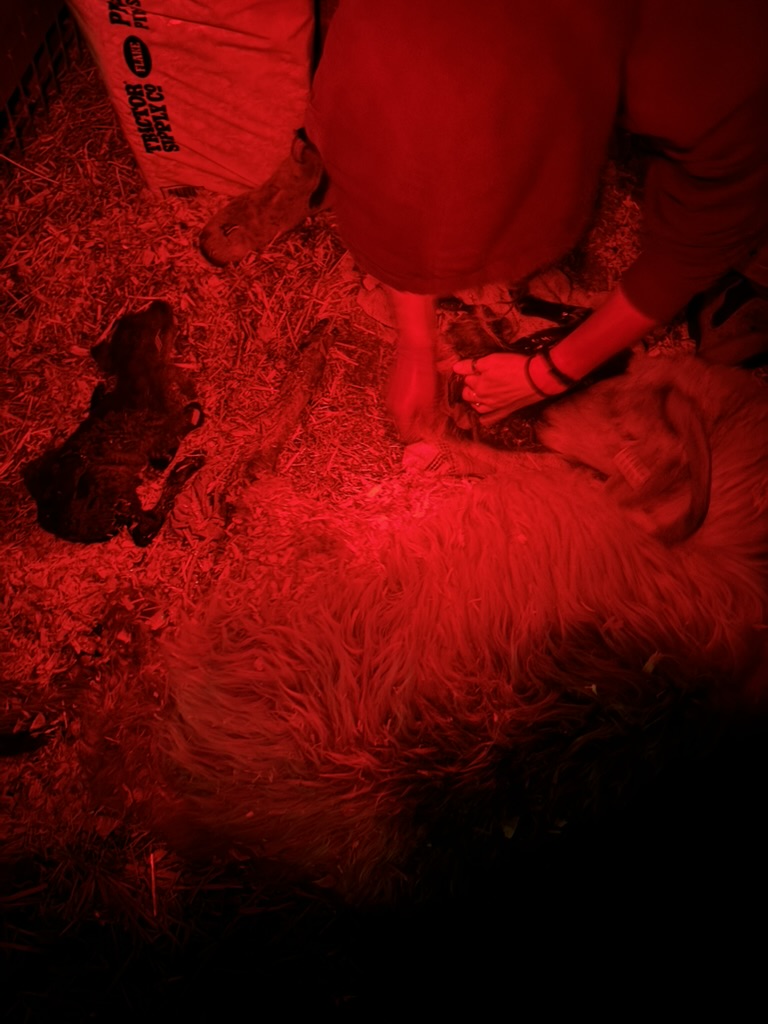
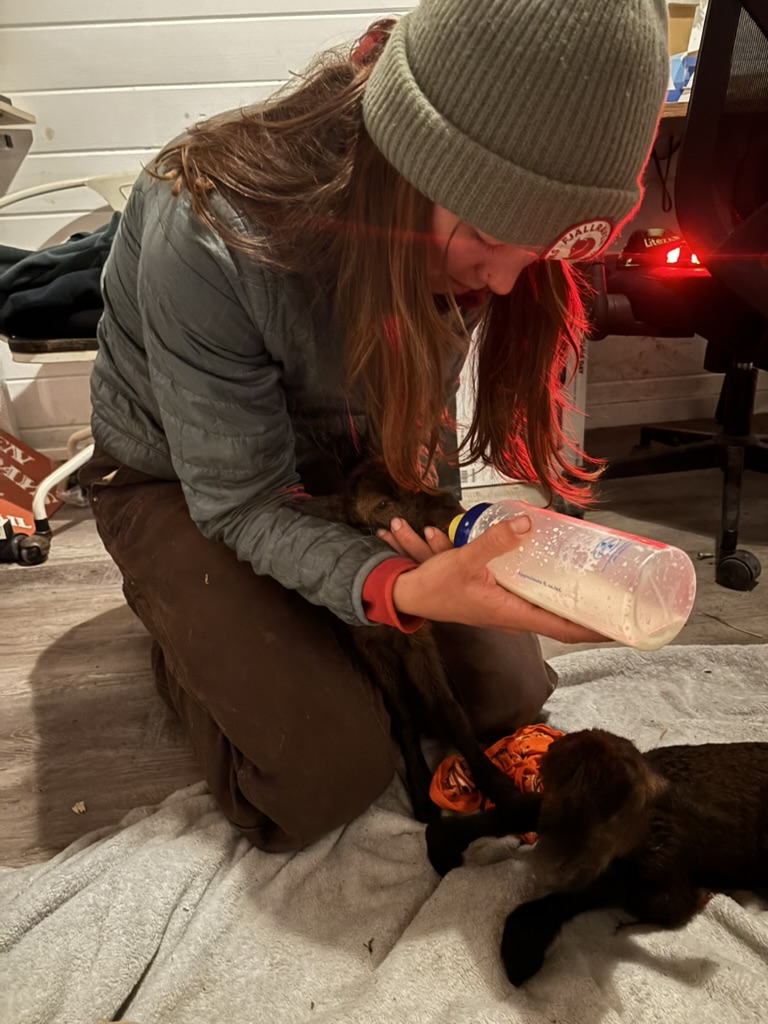
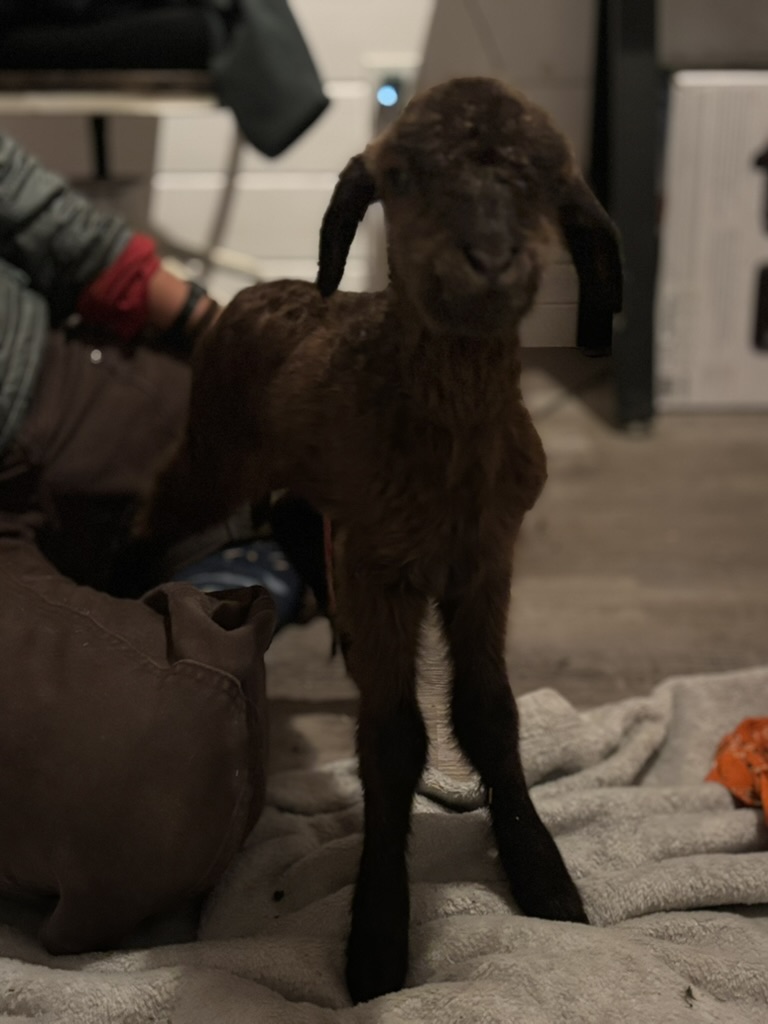
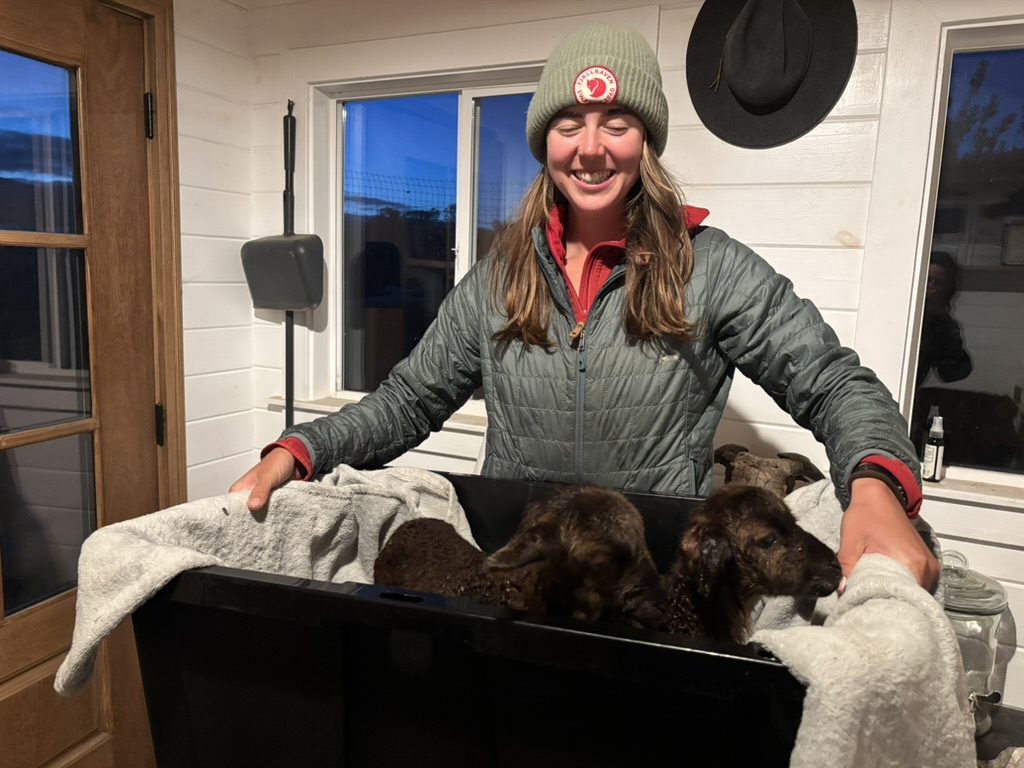
Two weeks before City Farm’s Fifth Annual Sheep Shearing Shindig, the three bred ewes were due to give birth.  Last week, Juniper and Poppy each had two males, and Clover, the oldest, got more  tired but didnt freshen.  Every day (and night) anxiety increased, and it was feared that she and her offspring might not make it.  Yesterday, Kayla and Kate tried for hours to induce labor and by reaching inside Clover to pull the babies out.

Along with Sequoia, the Farm’s Education Director, some friends of Kayla and Kate came by and brought them supper.  I showed up with beer.

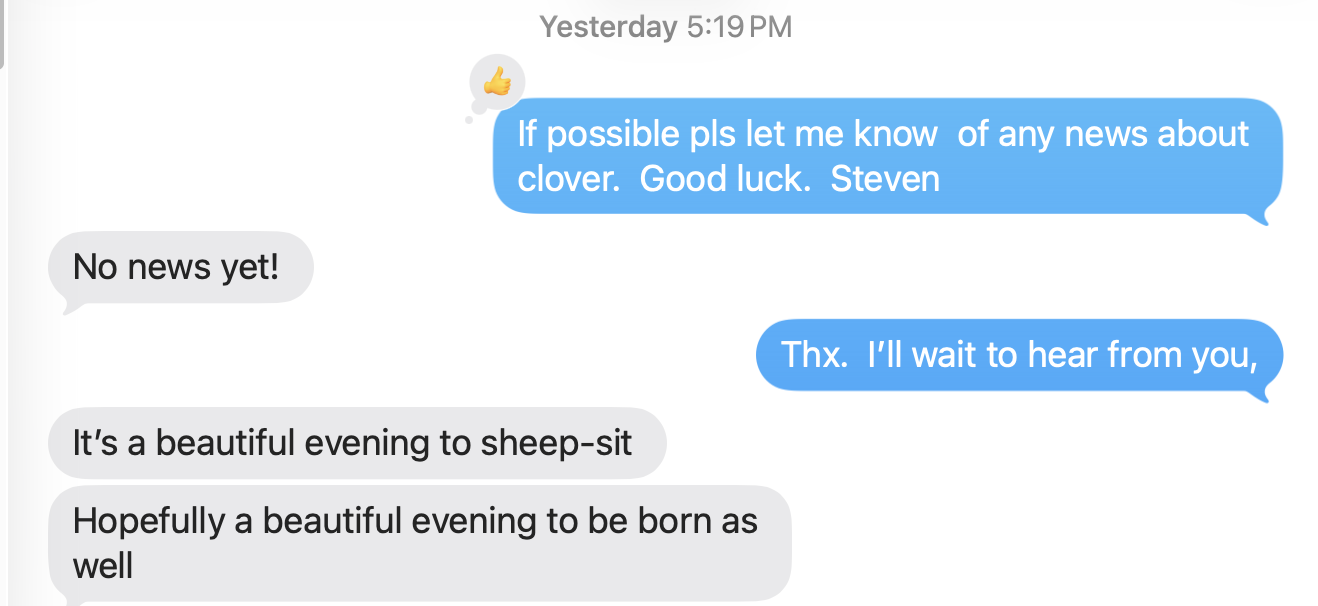
When I got up this morning, this text and pictures greeted me:

Though three lambs were expected, it looked as if she only had two.  Fortunately they were ewes. The plan was to bottle feed them and raise them as tame sisters who would take direction and affection and lead the other sheep.

I put together a greeting card for the lambs and their wonderful caretakers and left it in the Farm office on my way to meet Jesse and crew for the first day of work on the Ag-Ec project. Then I came back home to copy the card to this blog. While doing so, this arrived from Kayla:

Portugal Day 1

April 27th, 2026

Our first ever Uber ride was at 4:00 am to SLO airport, driven by the co-owner of a Korean restaurant in Atascadero taking on an extra job to help his daughter pay for medical school.  Jan immediately intuited that it was the restaurant where our family friend Emma worked before going to University in Hawaii.

Also for the first time, we traveled Economy Plus rather than straight Economy. At 83 and 80, for the 24 hour flight we chose comfort over price.

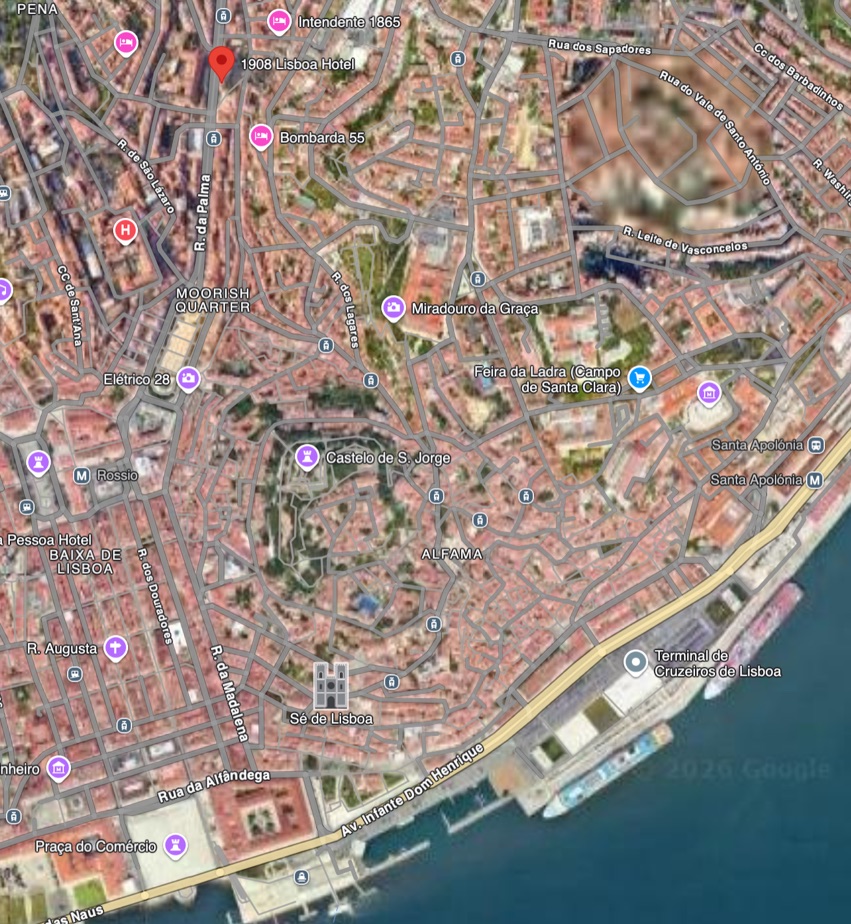
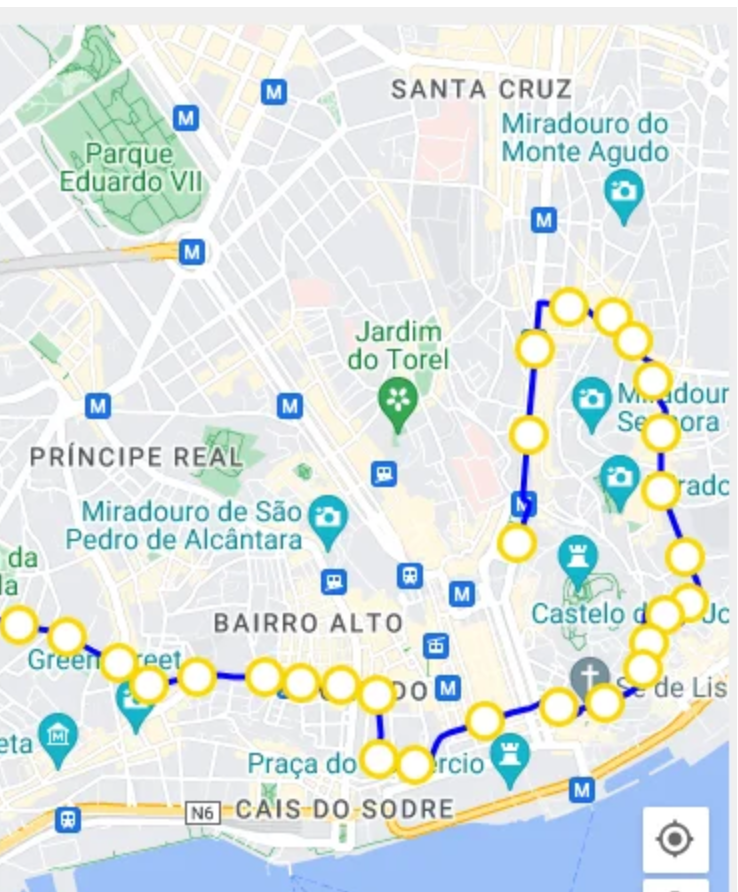
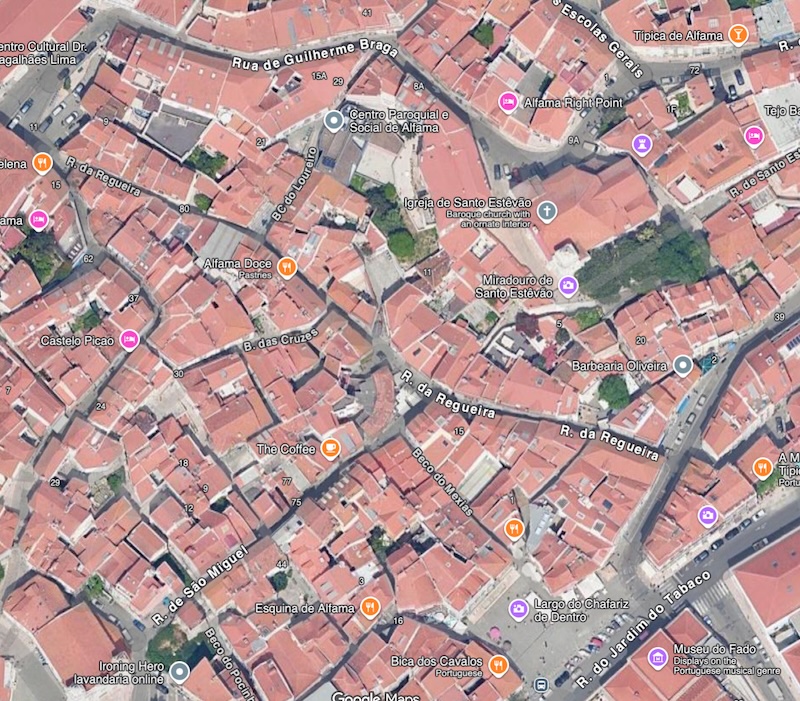
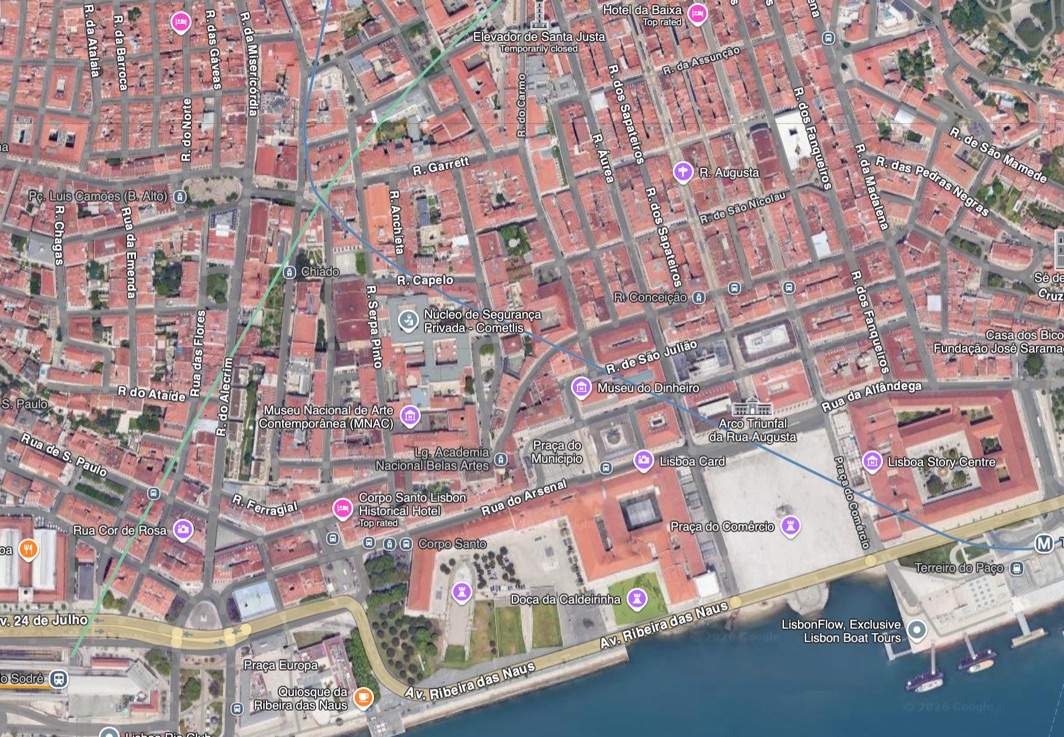
While reading about Lisbon in preparation for the trip I studied the google map to learn the lay of the land and the location of the hotel we’d be staying in for nine days. But I couldnt get oriented.

We were drawn to the Lisboa Hotel 1908 by articles on the web praising it as an architectural masterpiece of Beaux Art/Art Nouveau style built for luxury apartments, later, along with its Morauria neighborhood, falling into decay and then reconstructed  in 2015 with artistic and architectural flair, a center of the district’s new revitalization.

IMG_0186

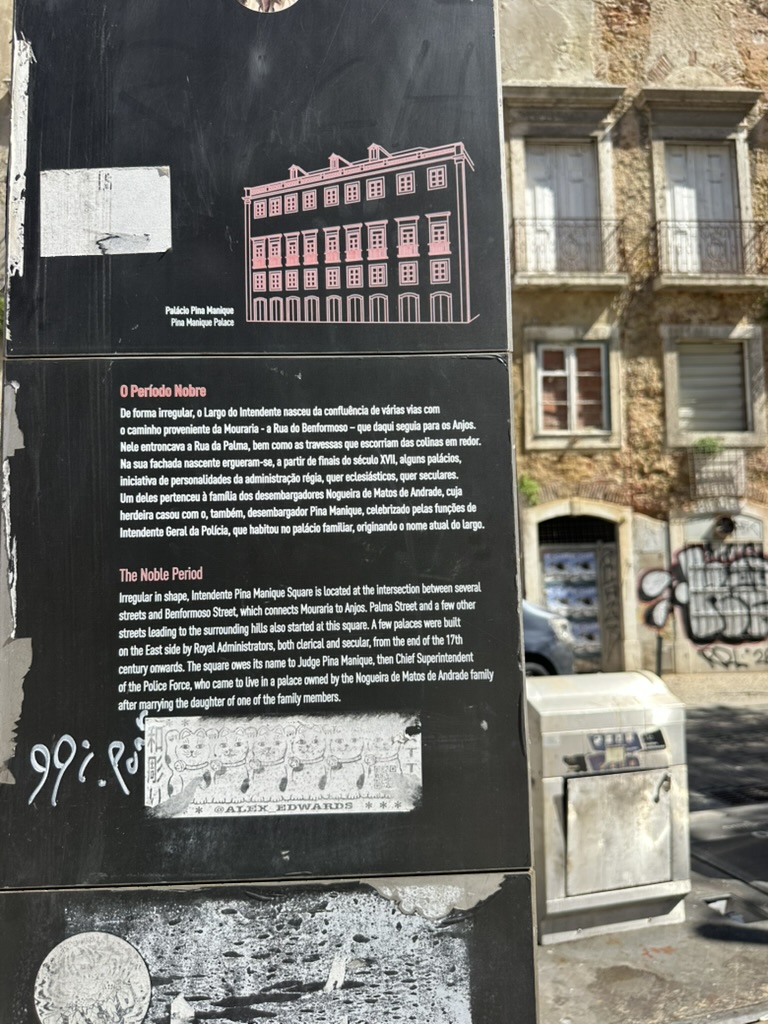
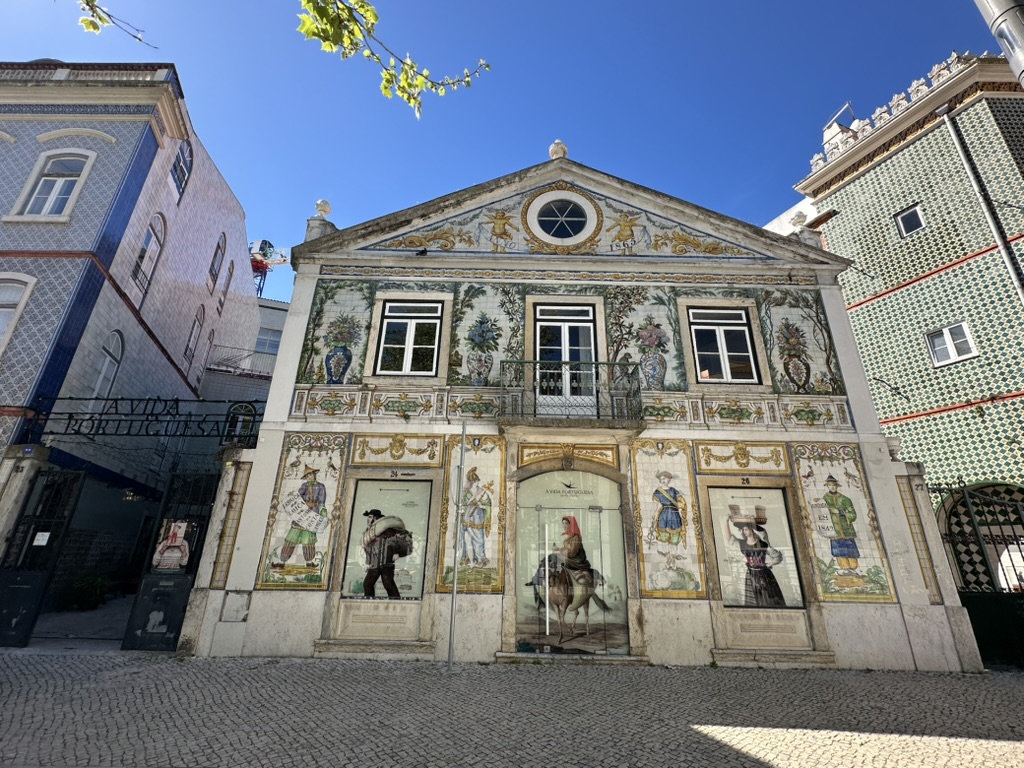
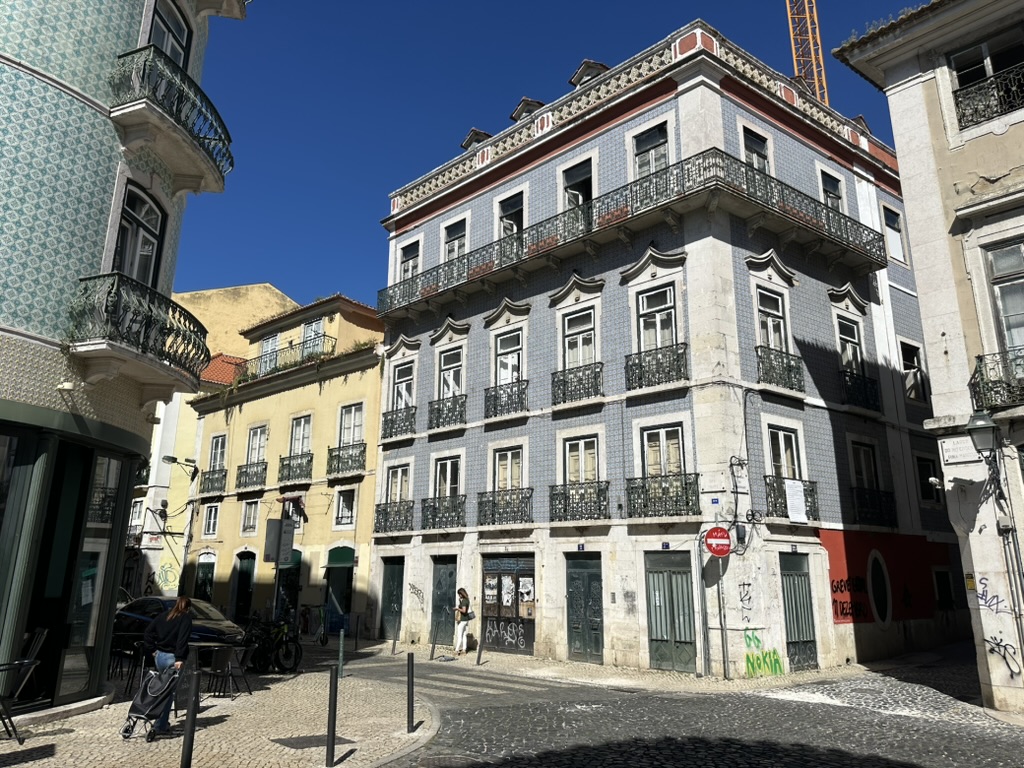
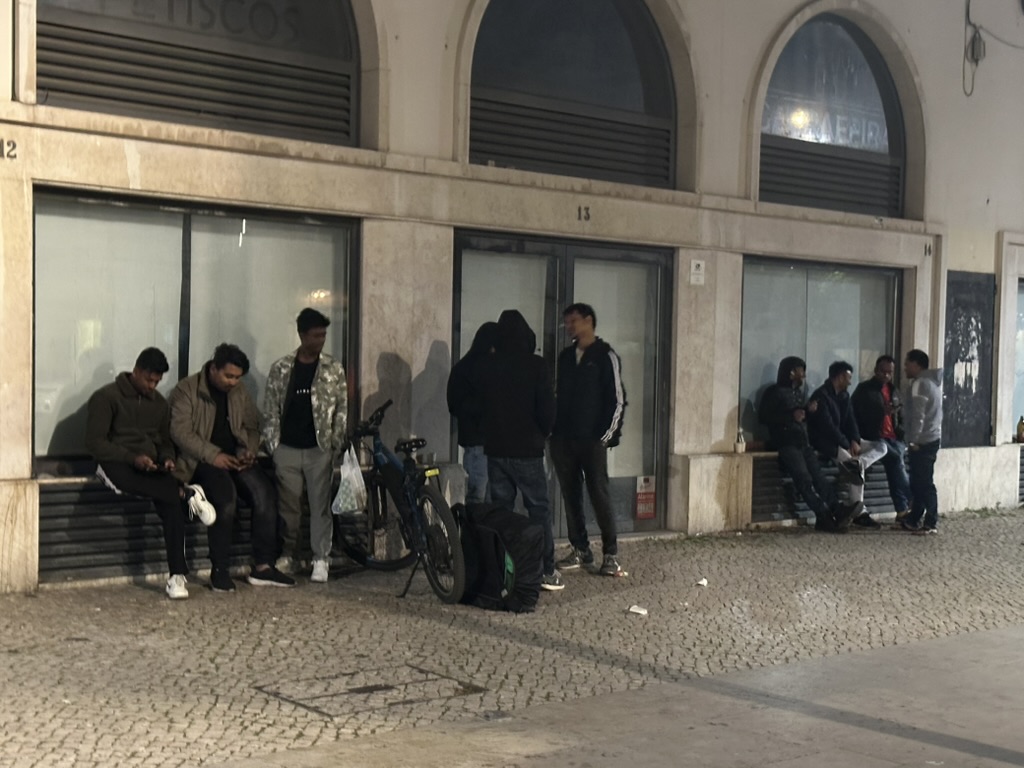
Upon arrival, rattling our rollies across the mosaic of rock pavers we were thrilled by the variety of sights and sounds in the sunlight on the square facing the hotel’s grandiose exterior: tree shaded cafes, bubbling fountains, multicolored, multishaped tiled buildings, a bedraggled old palace, an excavation, a group of school kids on tour, a bunch of  guys just hanging around.

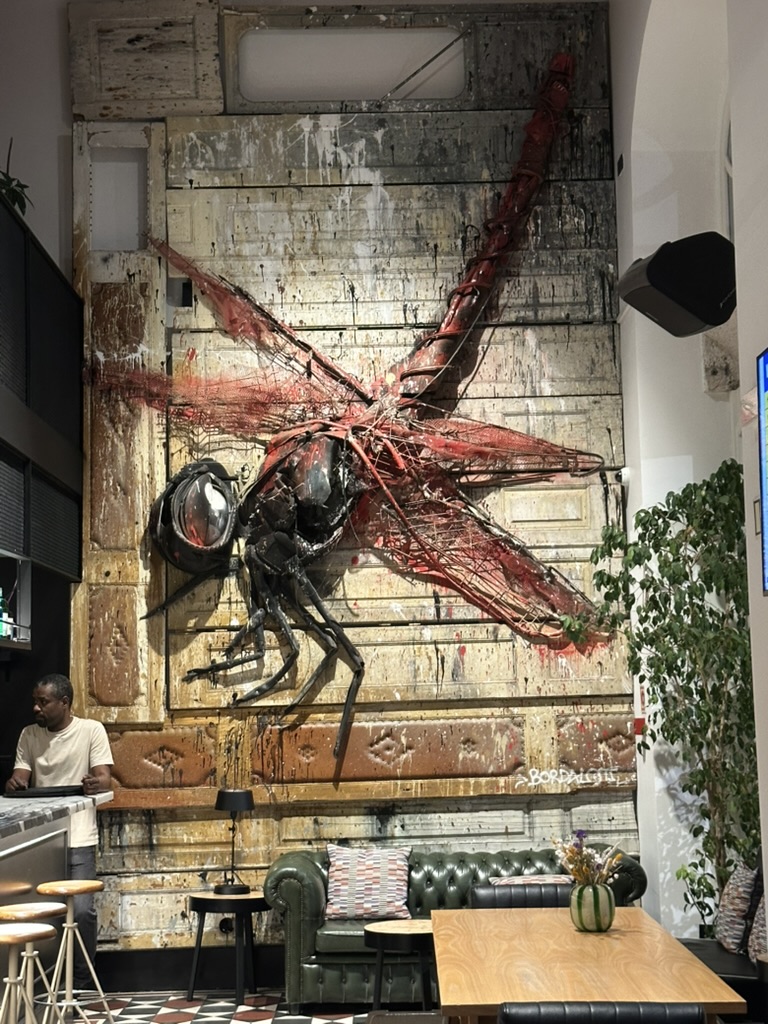
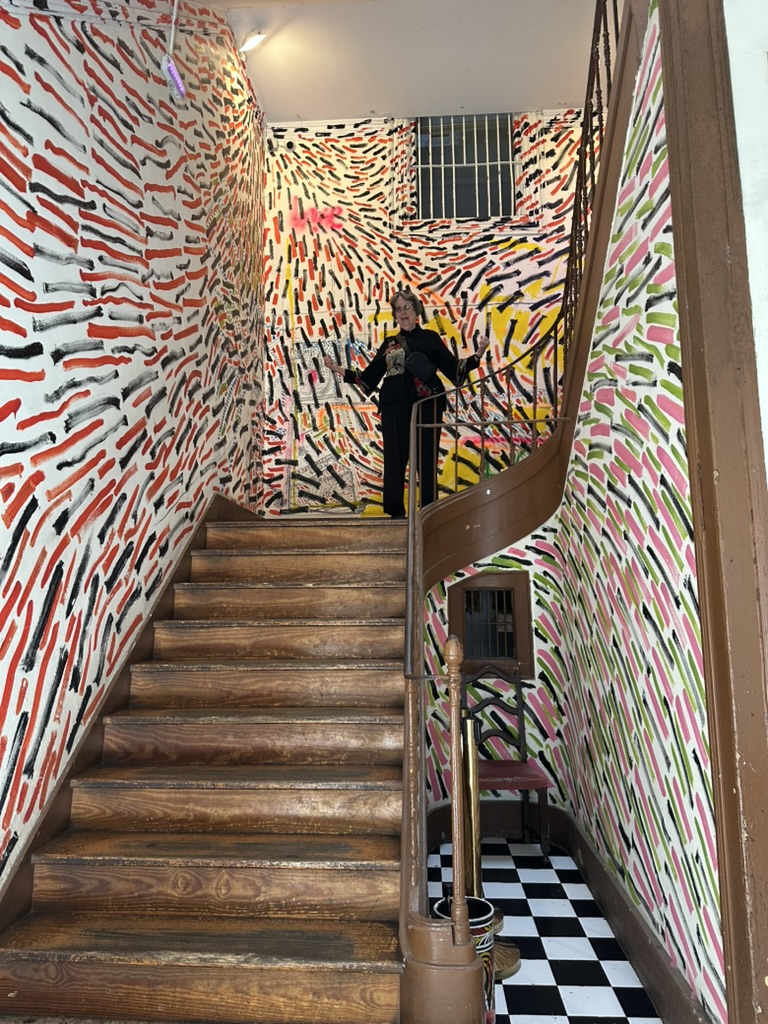
We were welcomed in good English by amiable staffers under the massive wall sculpture of a dragonfly assembled from trash and overlaid by spatters of paint that seemed to allude to the graffiti covering many of the city’s beautiful buildings.

The elevator ride to the room on the third floor extended the art gallery feel of the place, this time with a vertical mural revealed during the ride and keyed on the inside of the window.

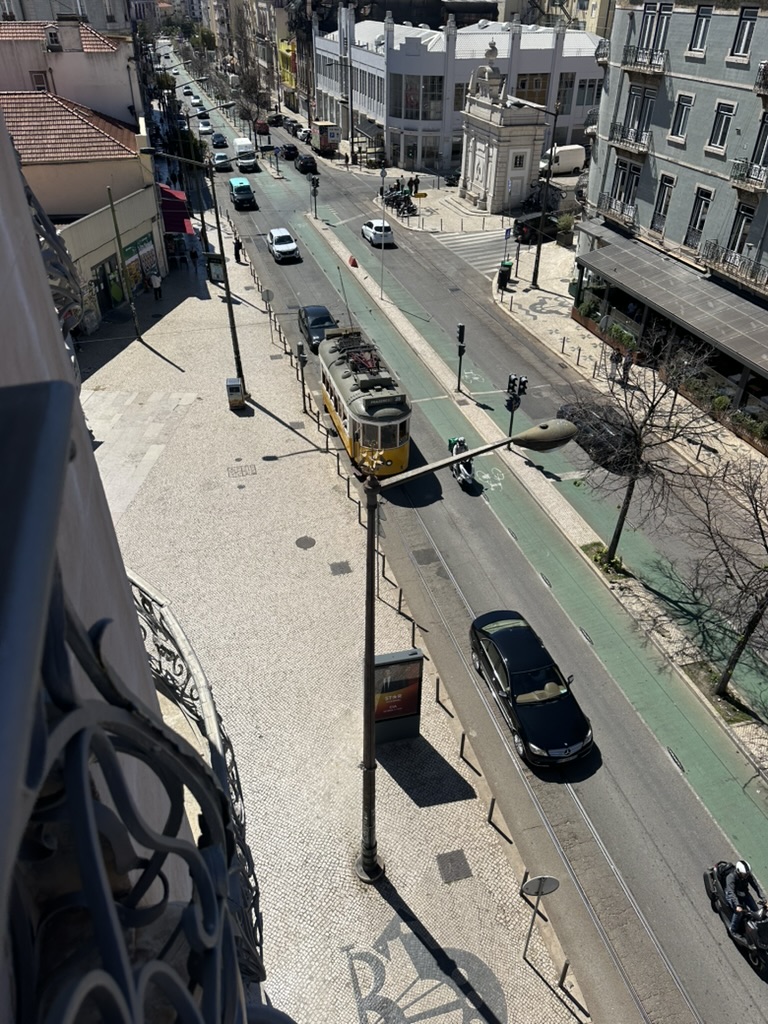
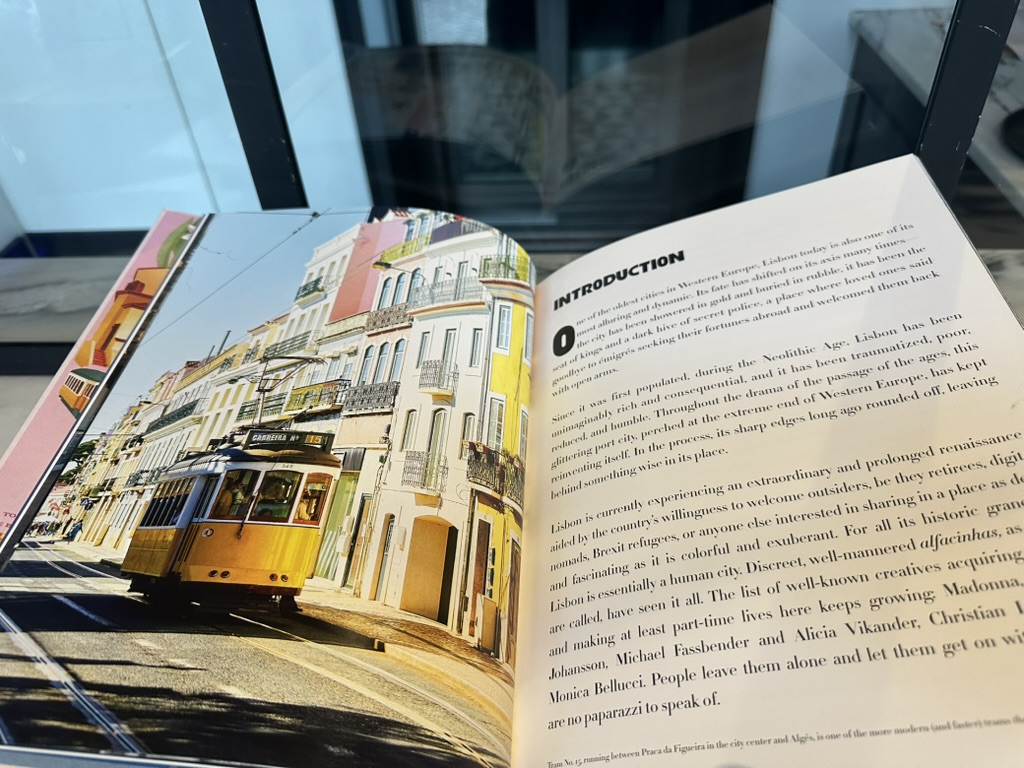
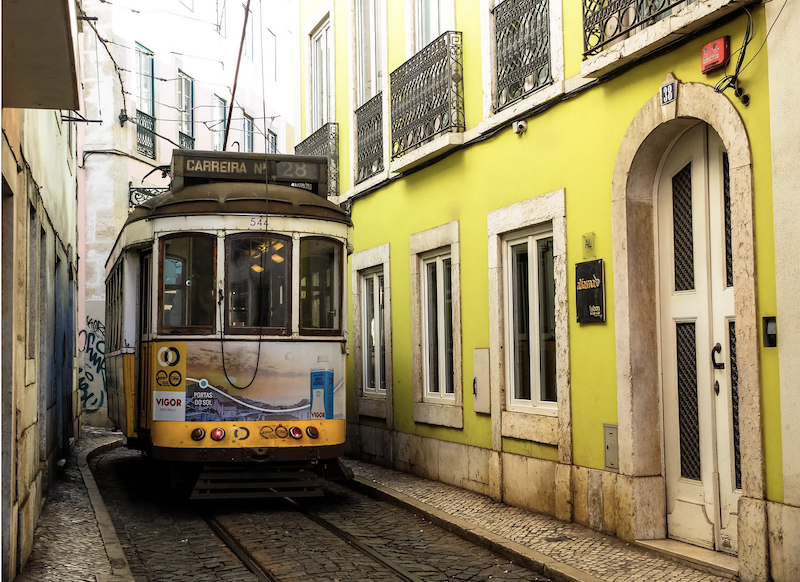
The balcony off the small room’s window gave out onto the  Avenida Largo and our first glimpse of Tram 28.

After unpacking and a nap, we roamed the plaza

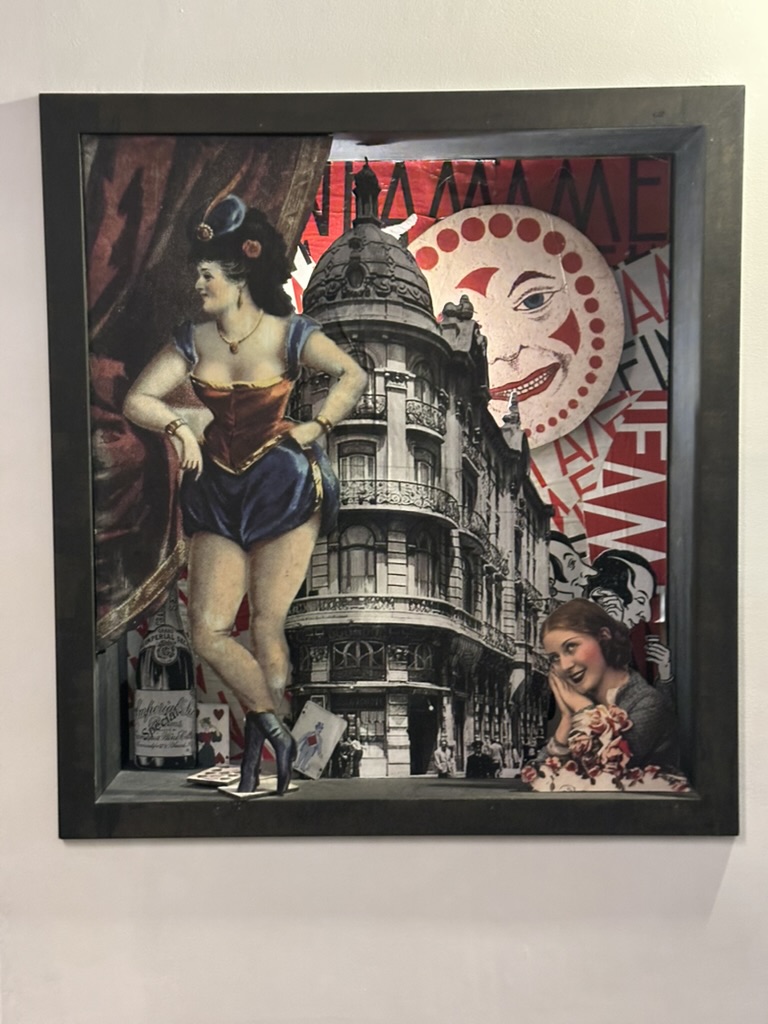
During dinner at “Infame,” the hotel’s restaurant, the art gallery ambience was reinforced by assemblages on the walls alluding to episodes in Portuguese legend and to the past history of the building as a bordello.

Portugal Day 2

April 27th, 2026

Our 59th wedding anniversary. After breakfast in Infame we walked through a mixed and somewhat sketchy neighborhood to catch Tram 28 at its terminus, since all the guidebooks warned that this most popular attraction of the City would be hard to board at any later stops.

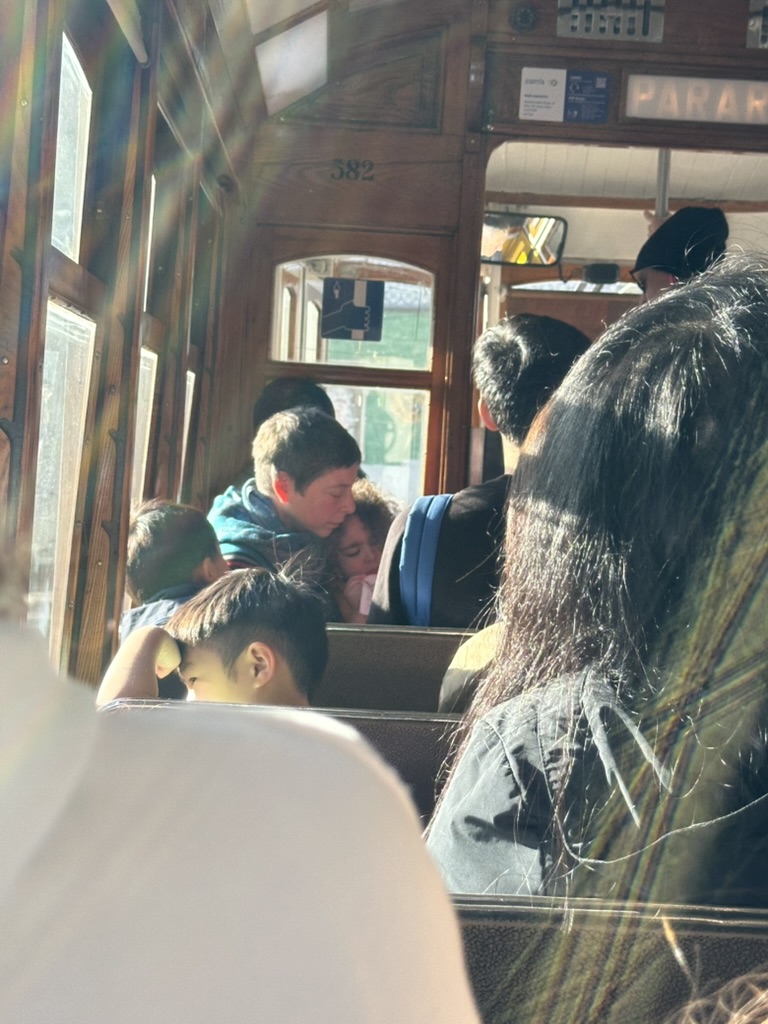
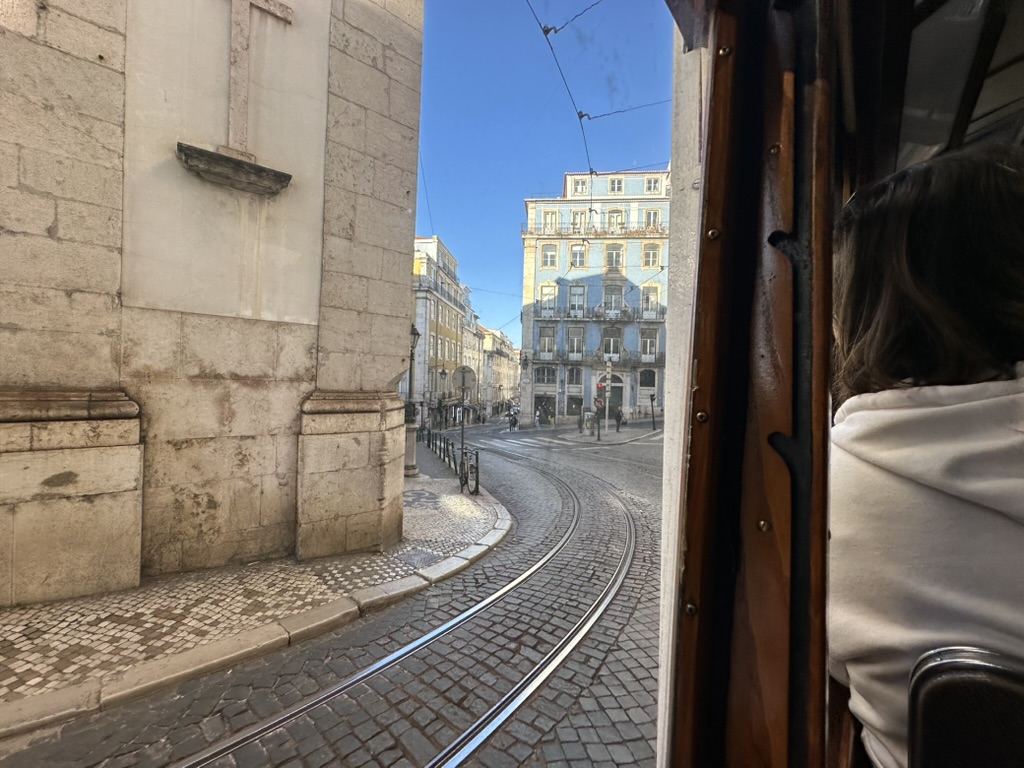
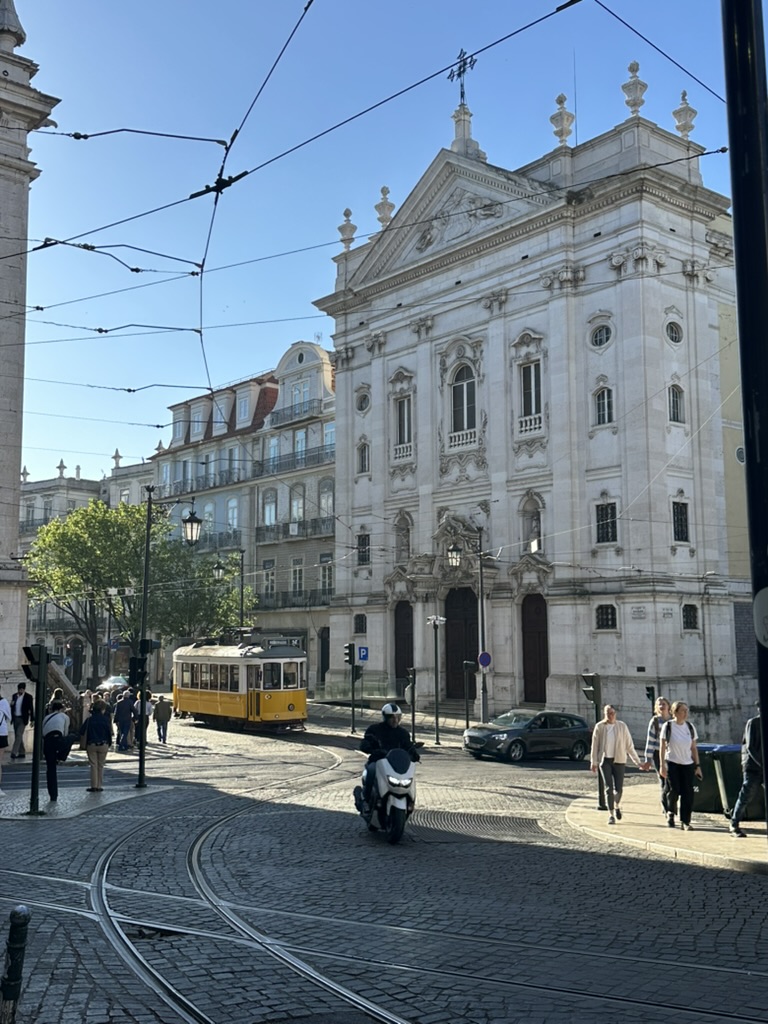
The trouble was worth it, though it turned out later that we could board at the stop right outside the hotel. Running every 10 minutes and winding the steep tight curves up and down the hills through the oldest sections of the city, its compact wood paneled cars served local commuters as well as tourist joyriders.

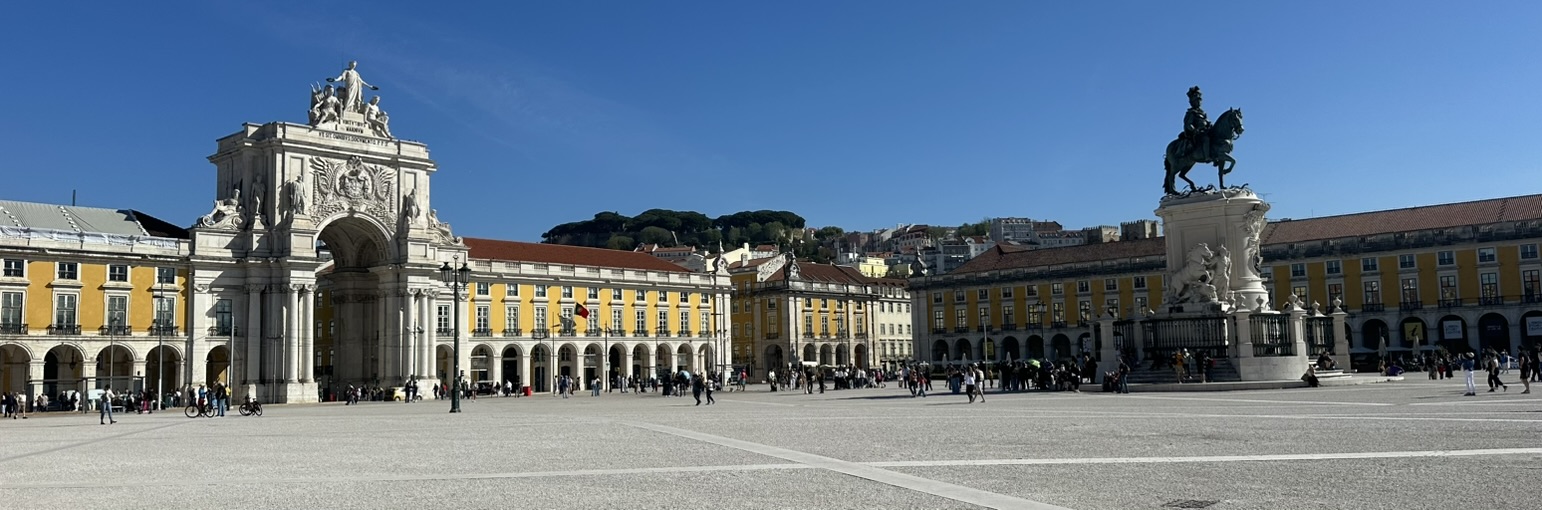
We got off at the last stop and made our way down to the historic waterfront whose grand central plaza was preserved since Lisbon’s central role in the European age of exploration and conquest.

From there the tram took us back to Largo Intendende and lunch at Josephine, outside the hotel’s entrance.
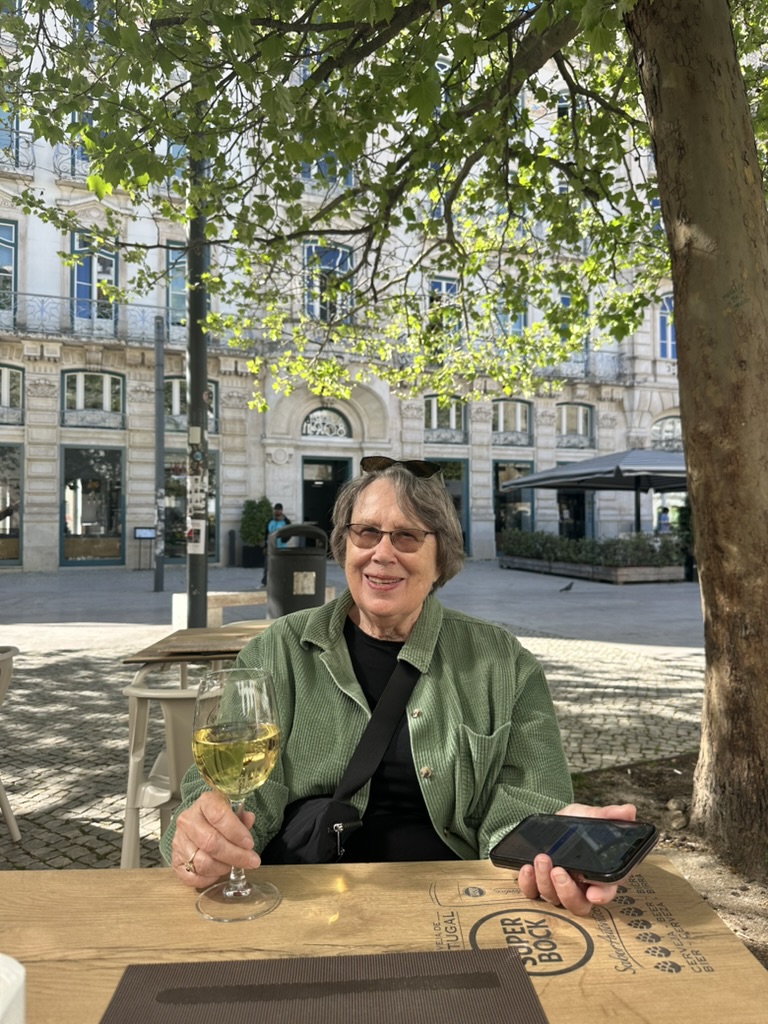
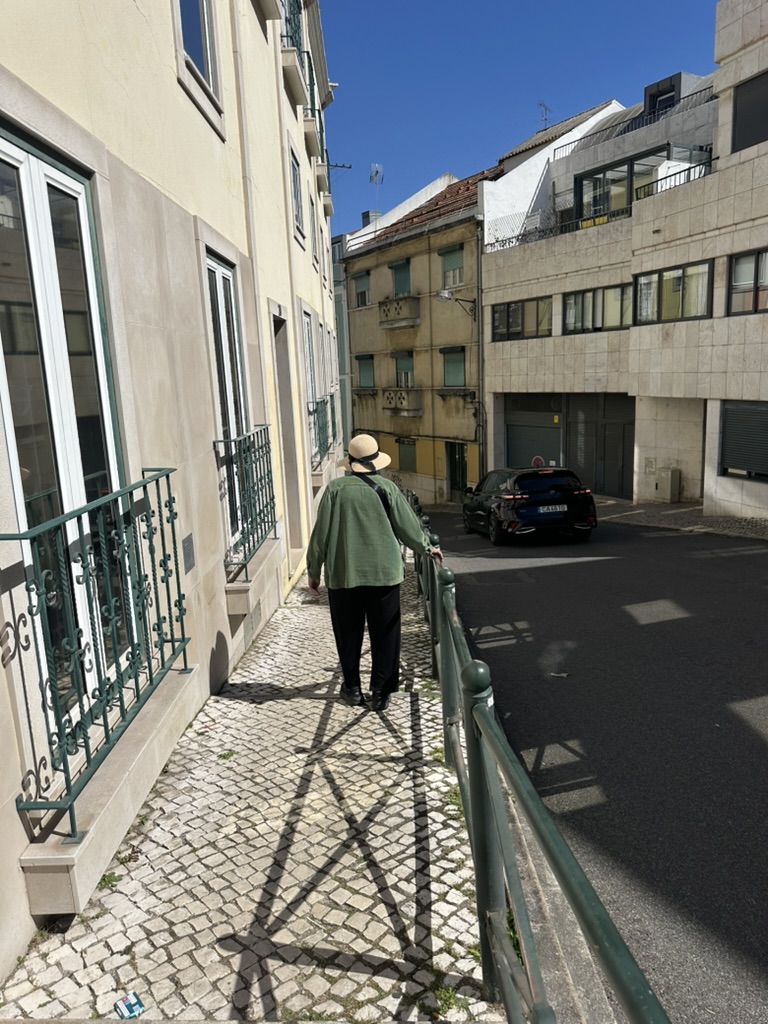
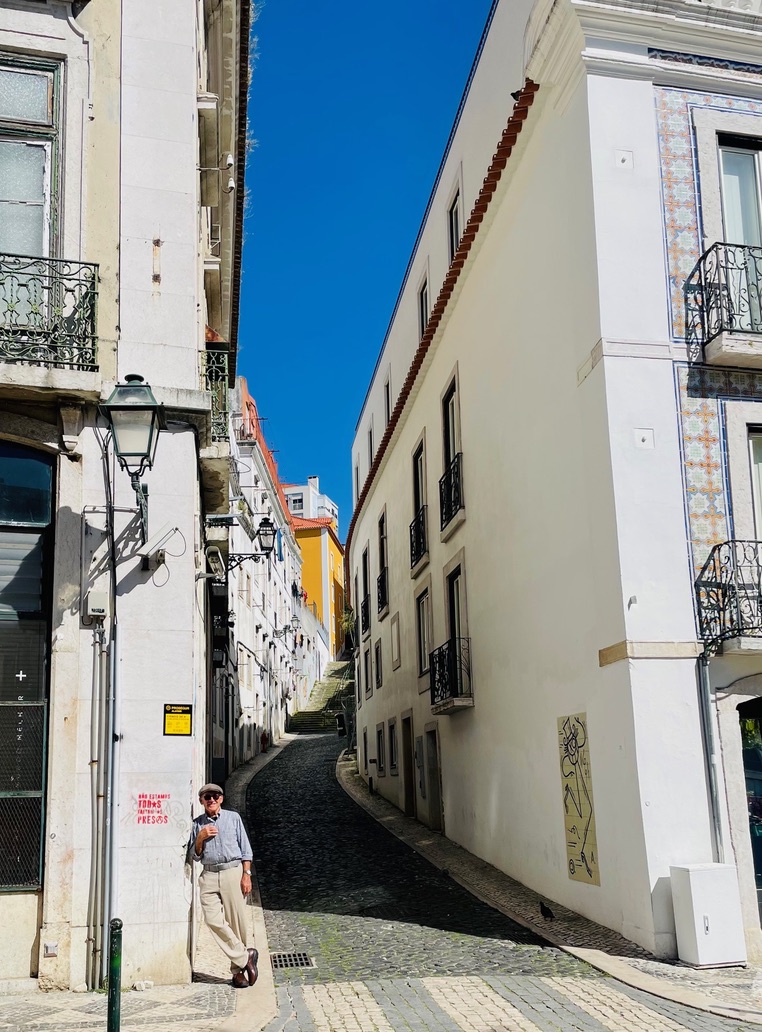
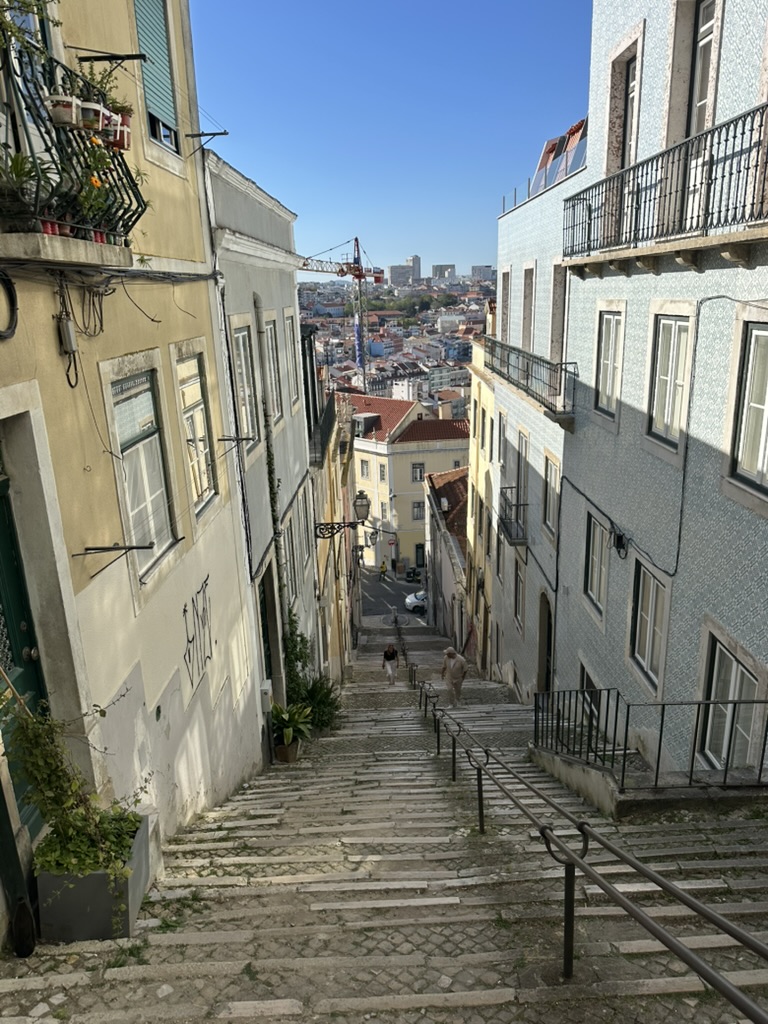
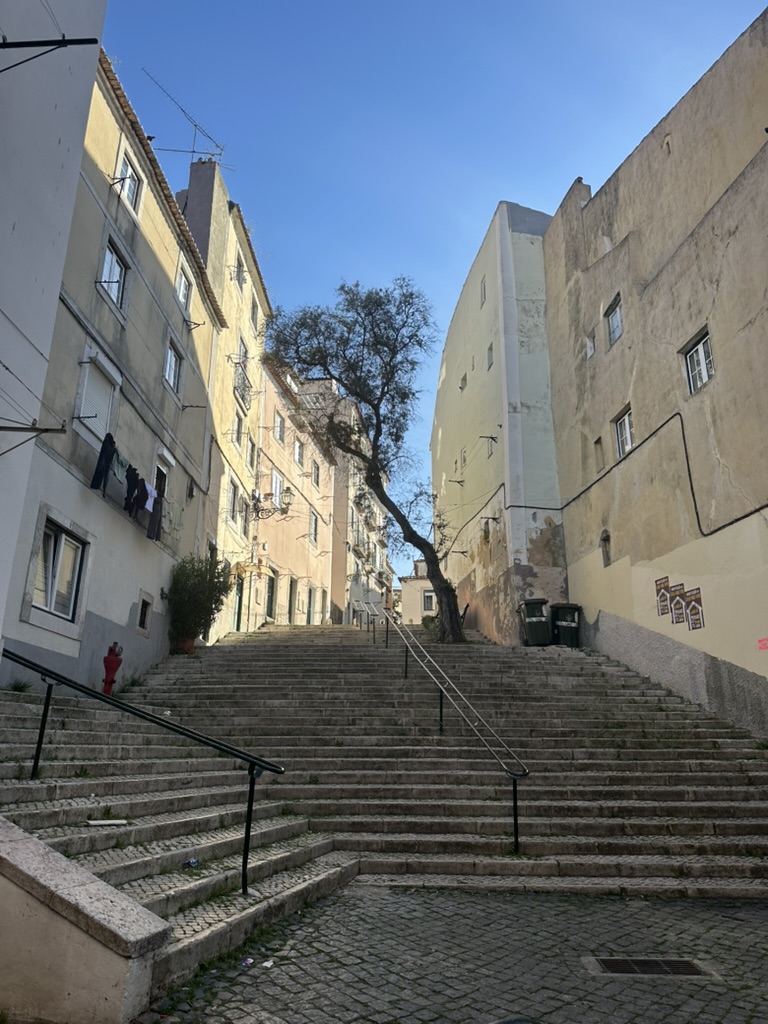
After an anniversary siesta, we crossed the street and walked slowly (and sometimes painfully) up the steep hill that rose along the opposite side.

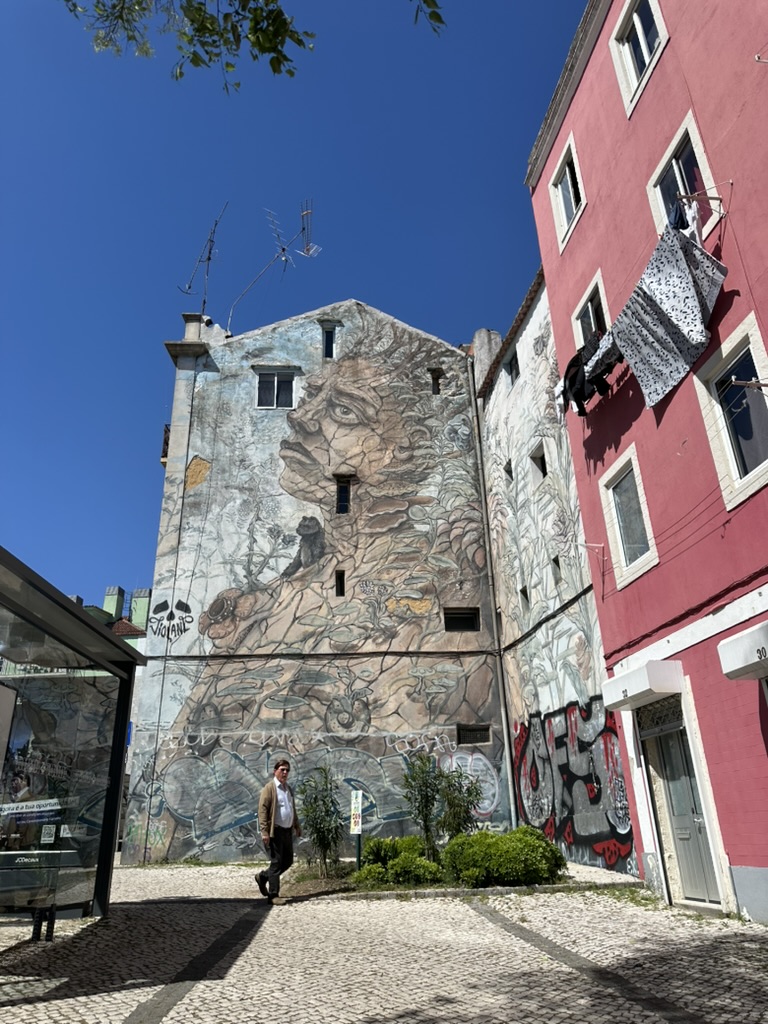
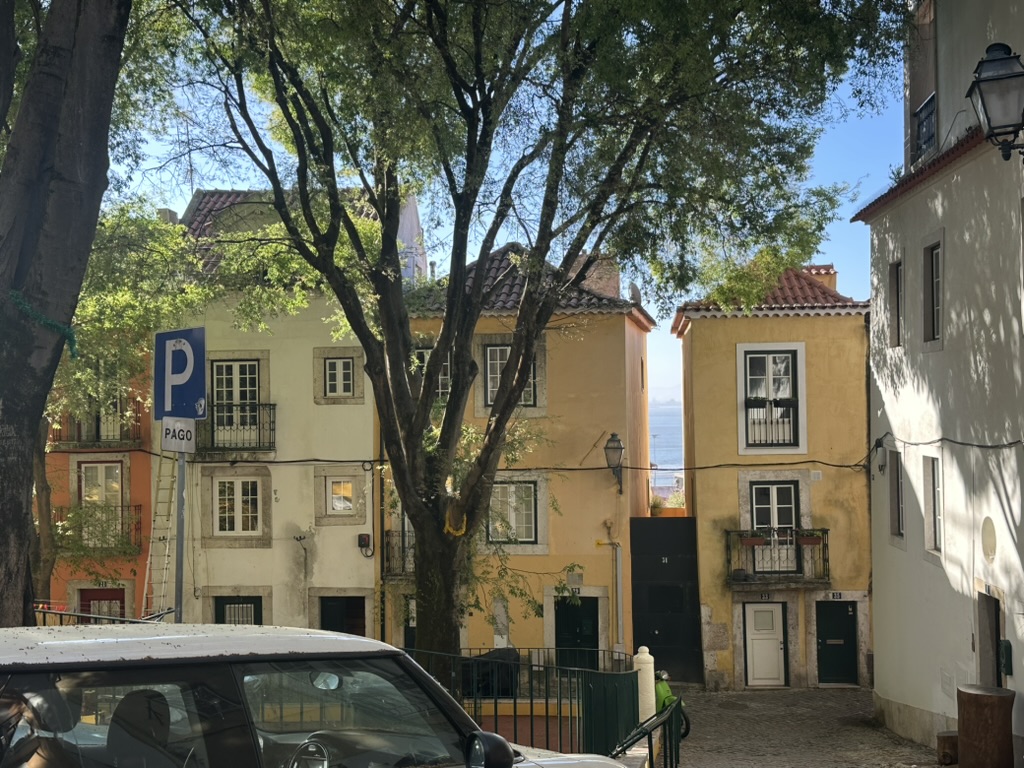
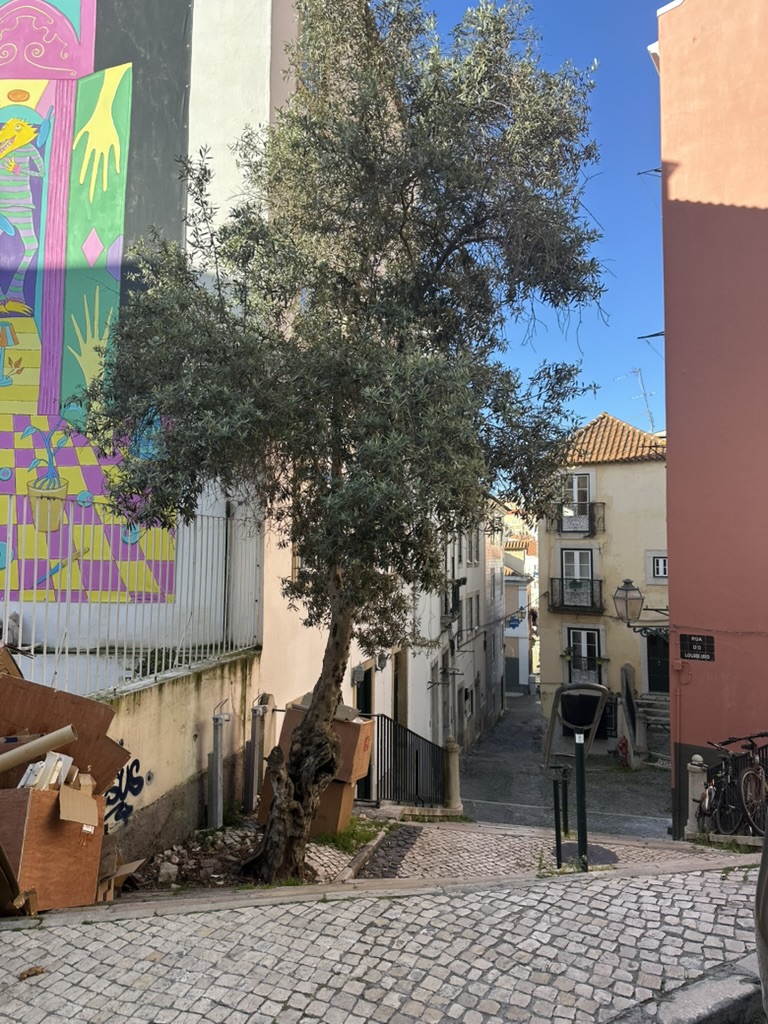
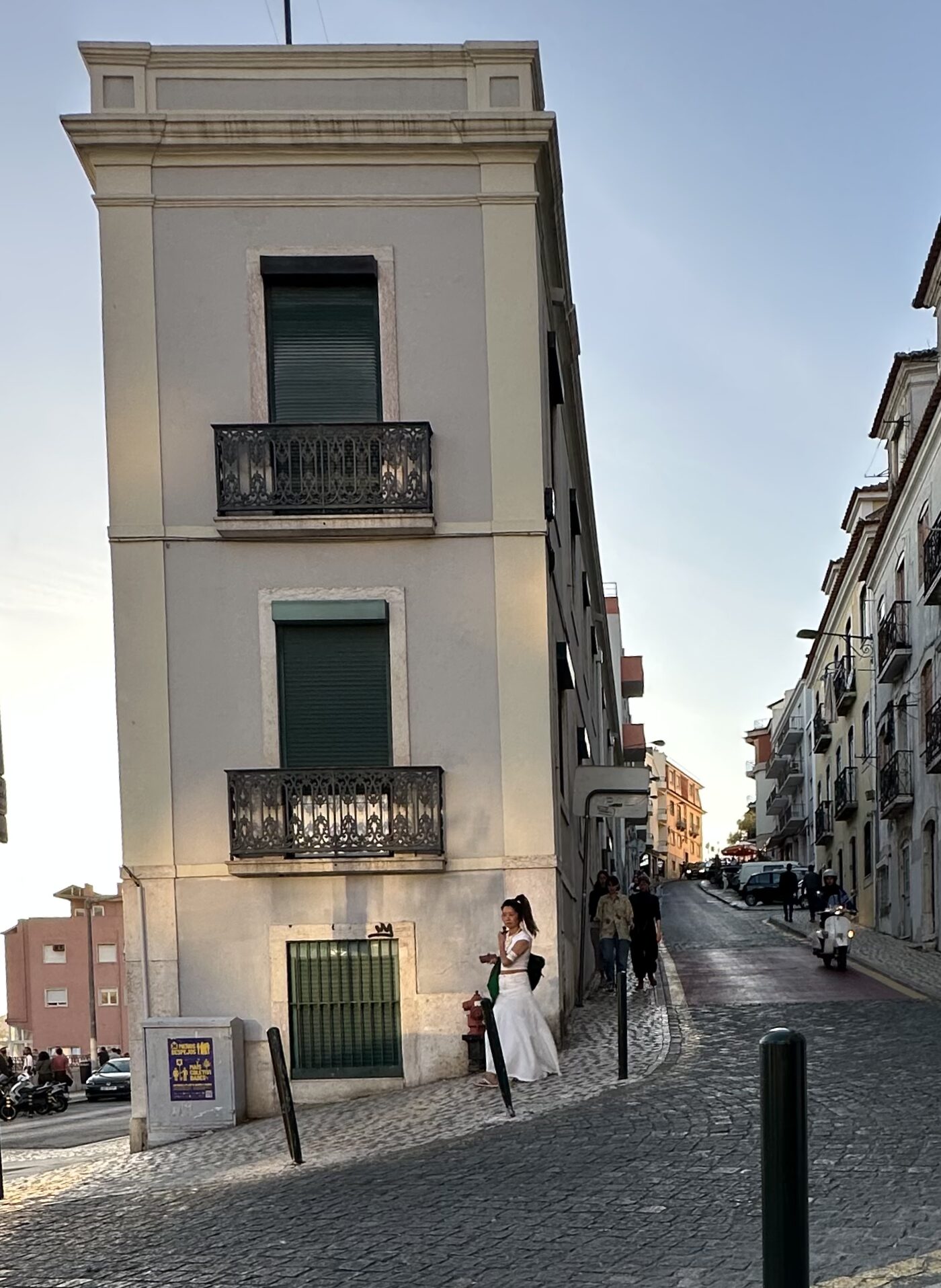
It revealed a cross section of varied neighborhoods of Mouraria in transition.  Elegant buildings, either in decay or restoration,  tiny cafes and shops, pocket parks, arresting murals, steep narrow streets, wide boulevards all within a quarter mile of the hotel.


After a brief rest, I set off again up the mountain on our side of the valley, driven by curiosity and adrenalin up flights of stone stairs to a little park and viewpoint I learned later was the Miradouro Senhora do Monte.

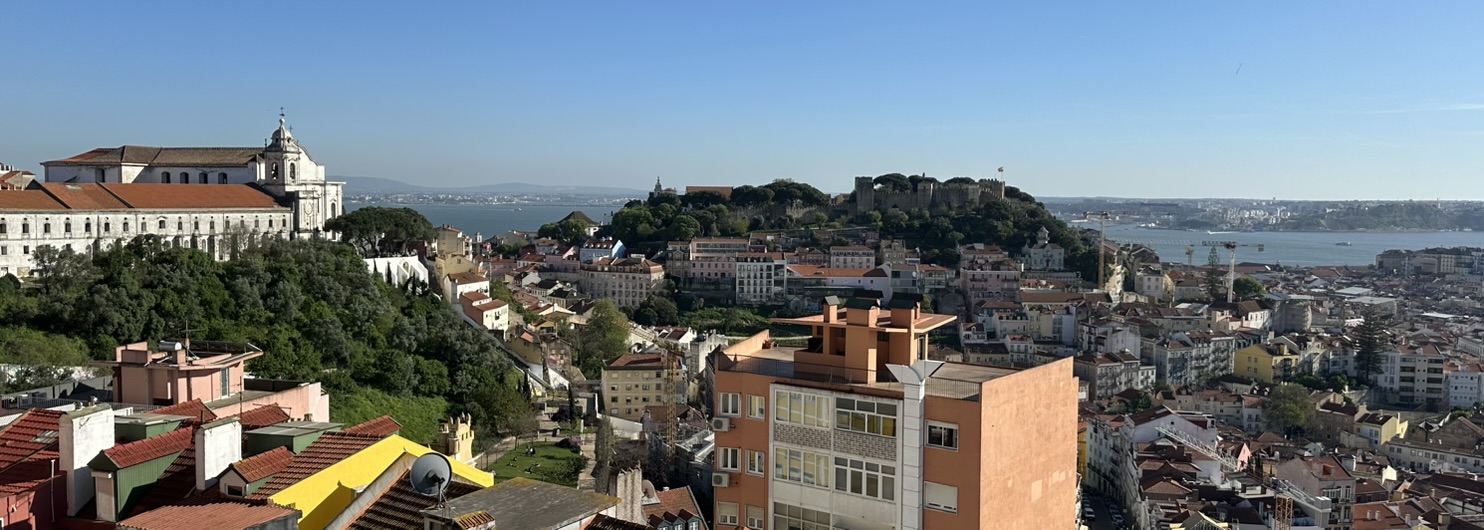
The viewpoint offered a grand panorama and was filled with happy tourists.

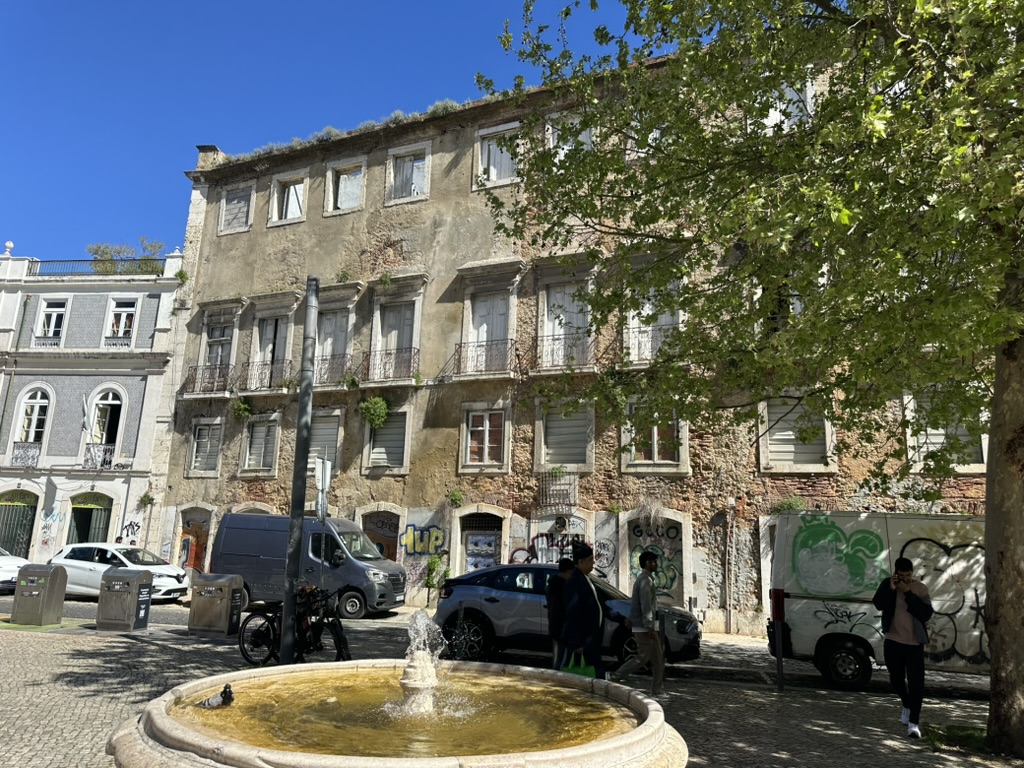
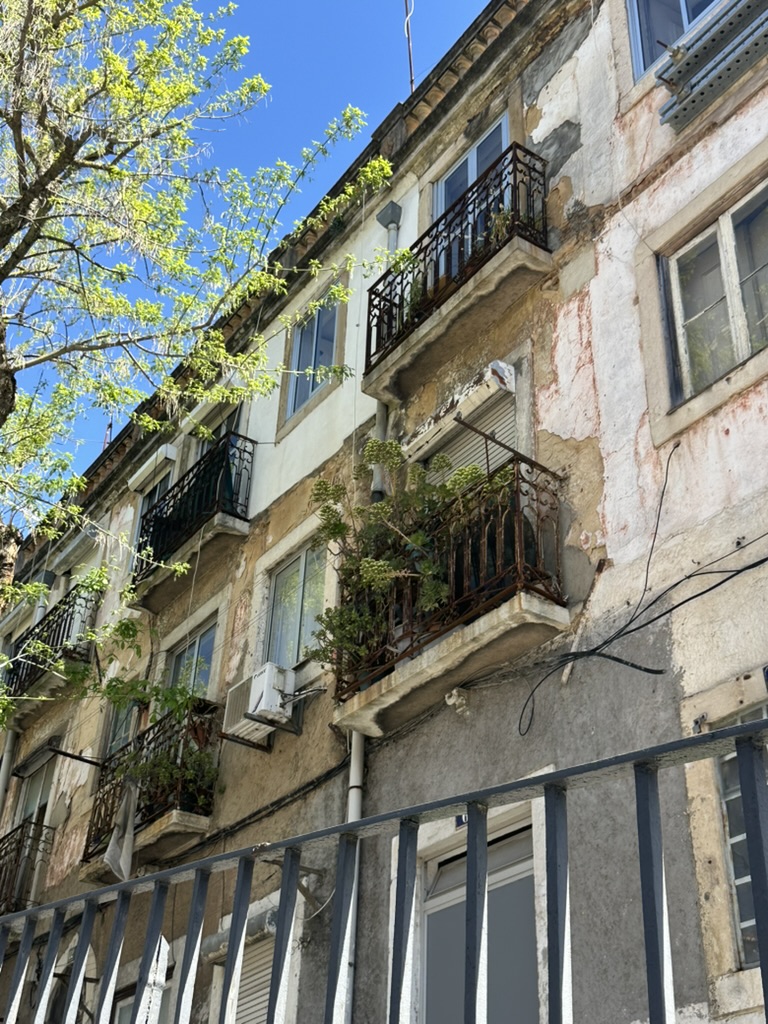
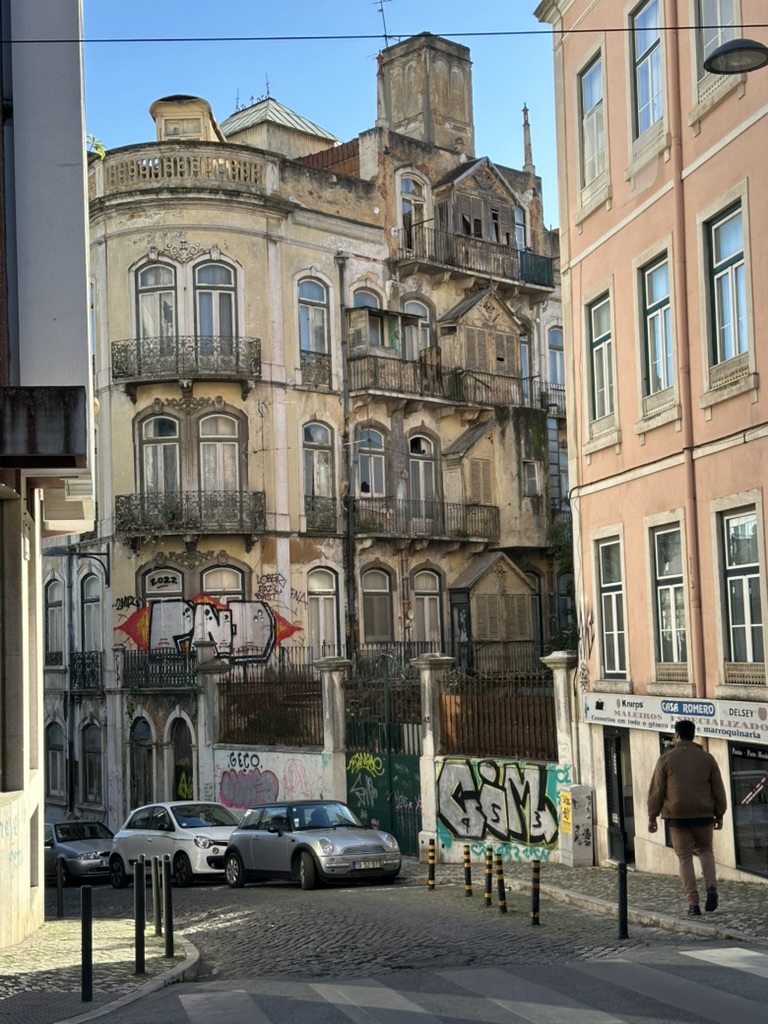
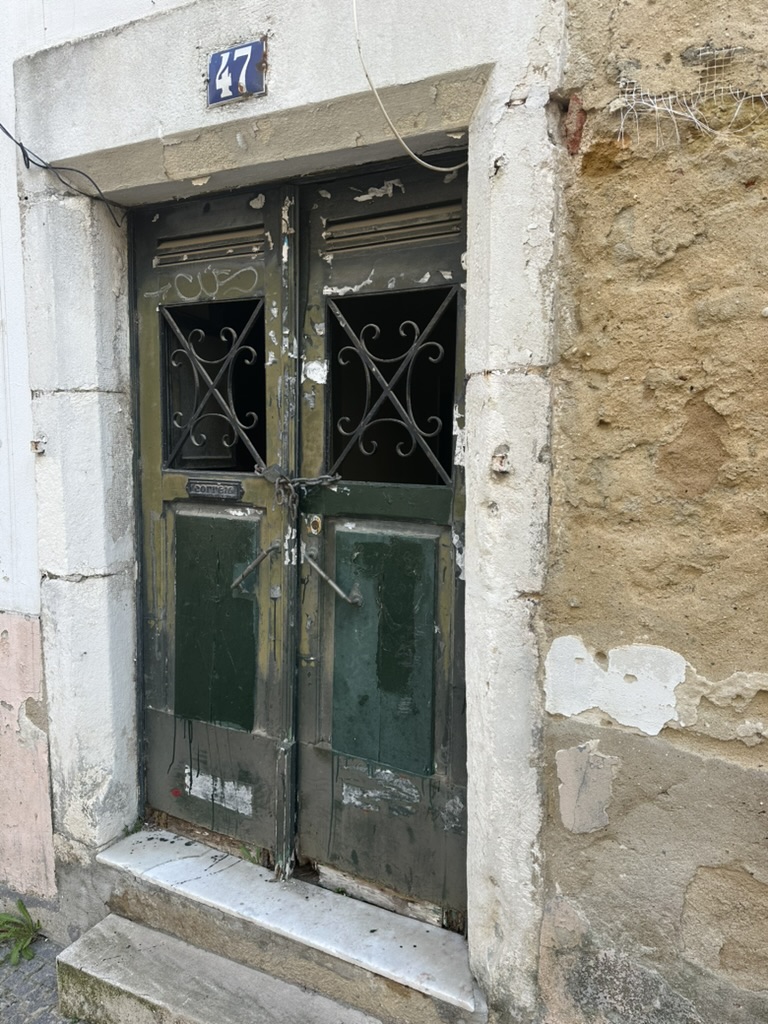
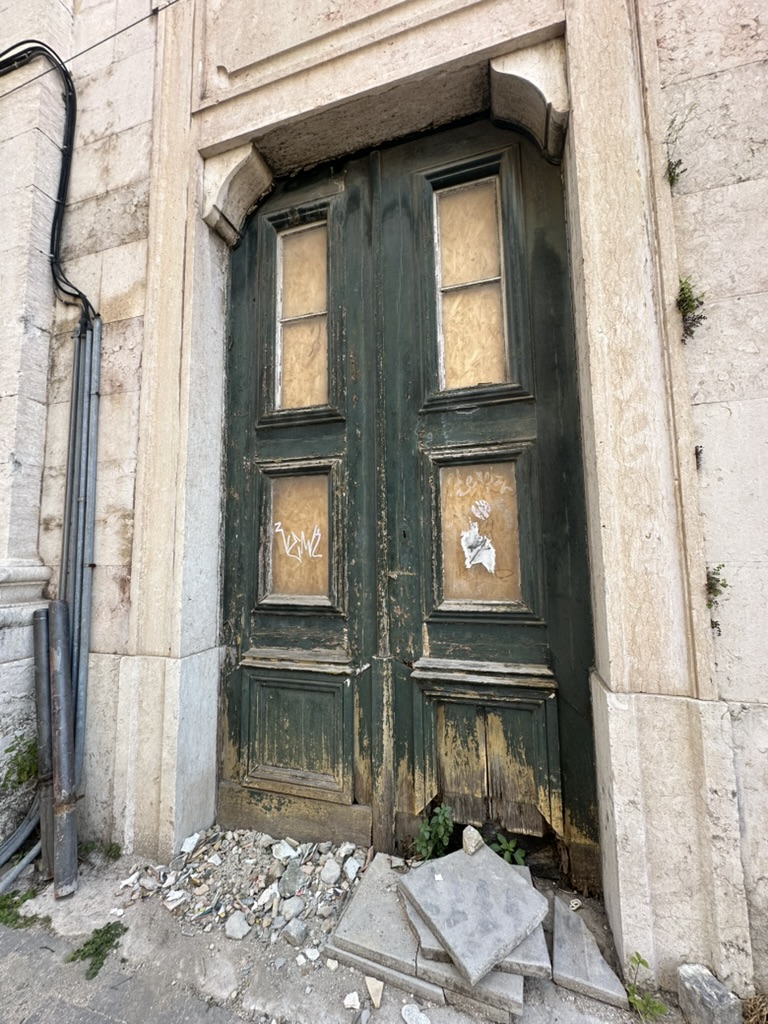
On the way down, I passed a fantastically weathered old building, probably what the Hotel 1908 was like before restoration.

Portugal Day 3

April 27th, 2026

Next morning we were eager to reboard Tram 28 and circle around to explore Alfama.  The oldest district of the city, its name comes from the period of Arabic rule from 714 AD to 1147 AD.

Alfama rises on the mountainside from the Tagus estuary in a  network of steep narrow streets which the tram winds through, sometimes inches from the walls on either side.

(photo credit)

At Escolas Gerais, we got off and wandered downhill.


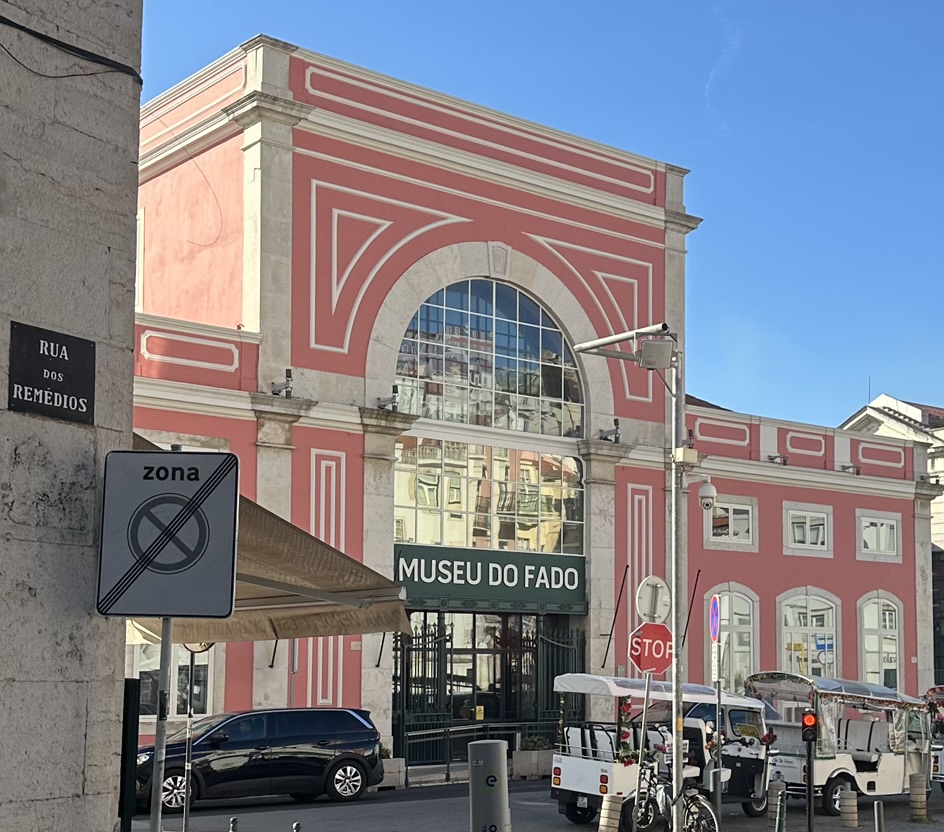
At the bottom we found ourselves at the Museo de Fado, where we learned about the traditions of the splendid music I’d discovered when we first planned the trip and had been  listening regularly to sweeten my morning PT exercises.

This was a crowded, souvenir-shop-dominated part of the downtown where the cruise ship in the harbor had just disgorged its ten thousand passengers.

Traffic was so thick that Tram 28 couldn’t get through to take us back to Mouraria, so we traipsed through crowds to the metro and rode back underground for lunch and nap.

In late afternoon, indulging in a Bolt ride to the mountaintop, I led Jan to the viewpoint just above the hotel I had discovered the previous day.

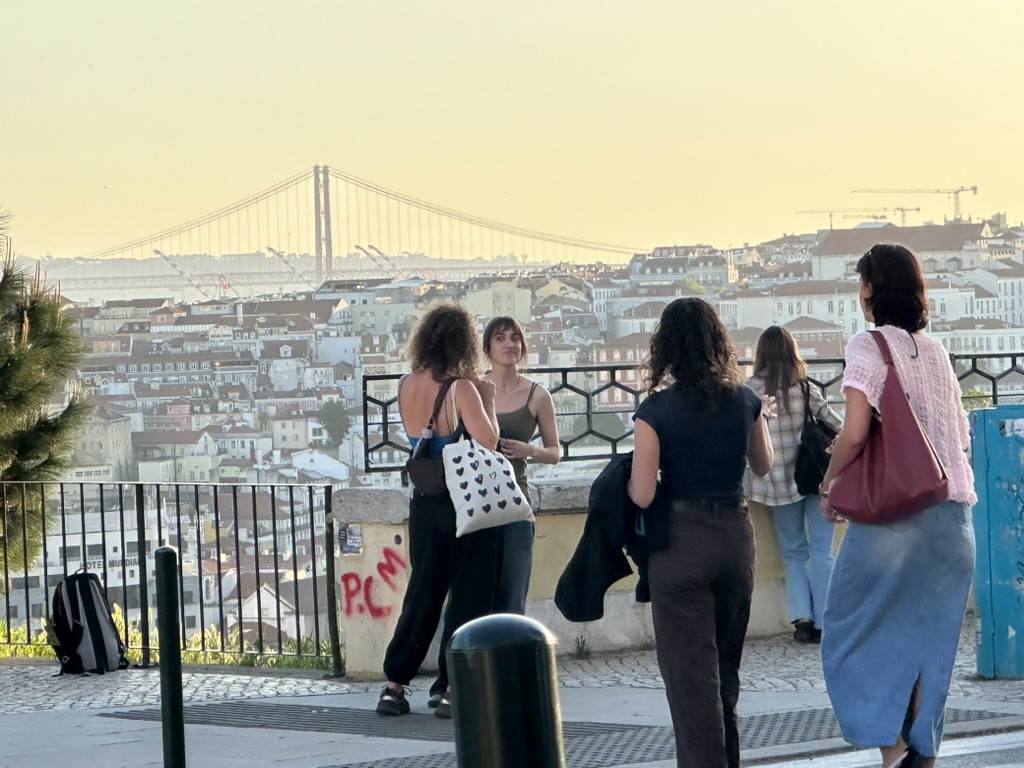
After gazing at the river and the cathedrals and castles draped over the City’s seven hills, we noticed a little gap in the retaining wall. Somebody walked through it down a steep stairway from which live music was filtering, and we followed.

At the base of the stairs there was an opening in the greenery and a woman came out. In response to our question, she pointed behind her and said, “The Secret Garden.”  We entered and saw  a platform supporting a crowded bar, bandstand and dance floor. Below that hung more terraces looking out over the city.

We elbowed through the joyous crowd to the lowest one and found chairs.  Off to the right I saw people emerging through the greenery. I pushed through and found another bar with a small art gallery where I bought drinks and returned to Jan.

We sat enjoying the atmosphere, the prospect of the city directly below and the surprise of discovery.

On the way out  we danced to the hot band.

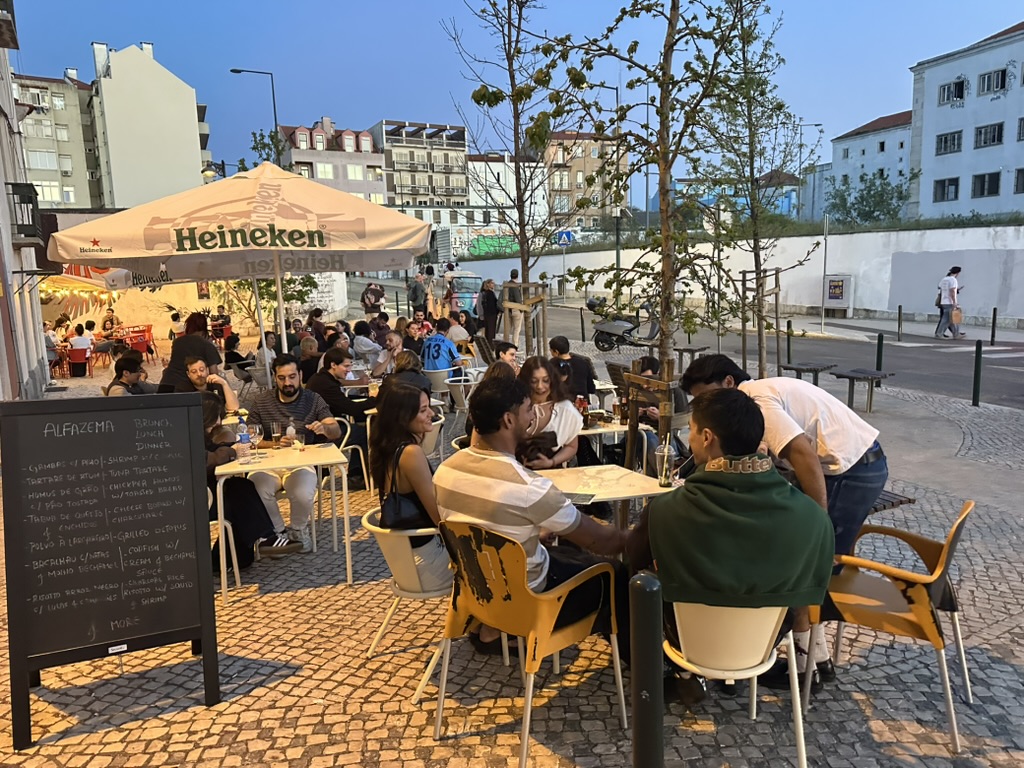
We found dinner at a café down a street leading away from the viewpoint to another one, where we watched the sunset over the Atlantic.

Portugal Day 4

April 27th, 2026

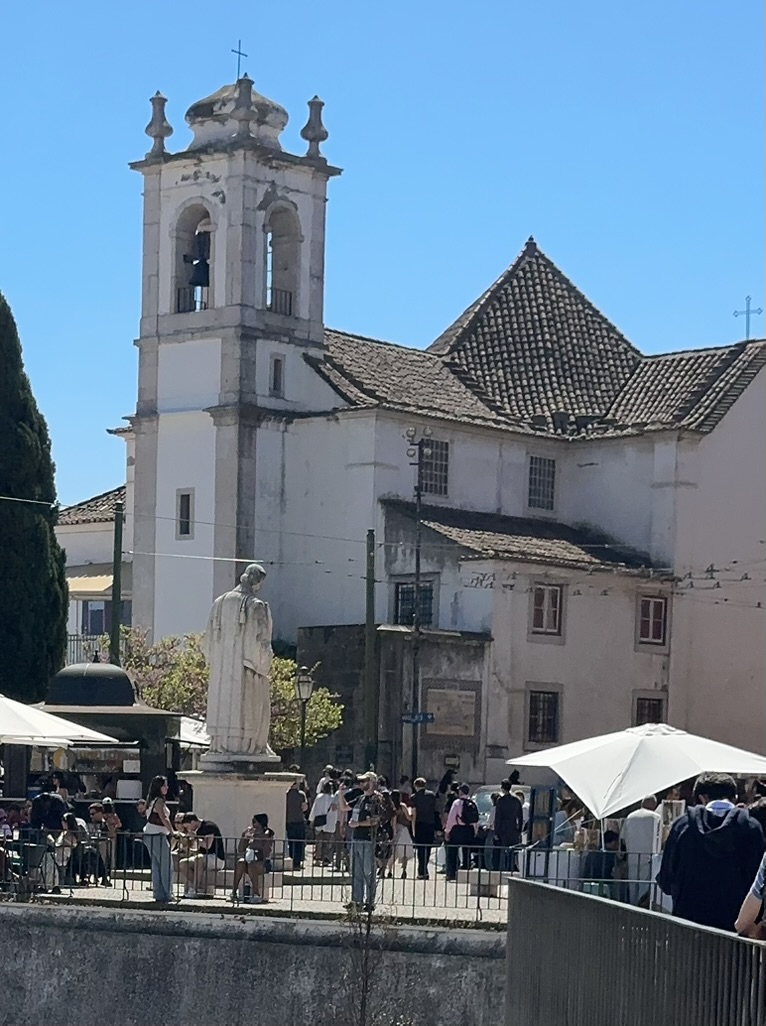
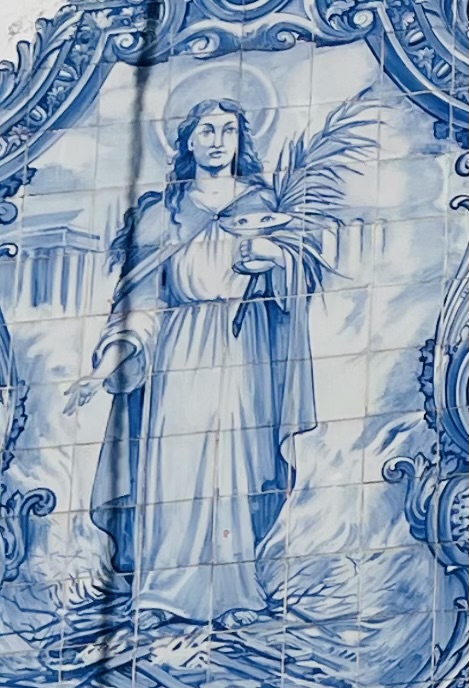
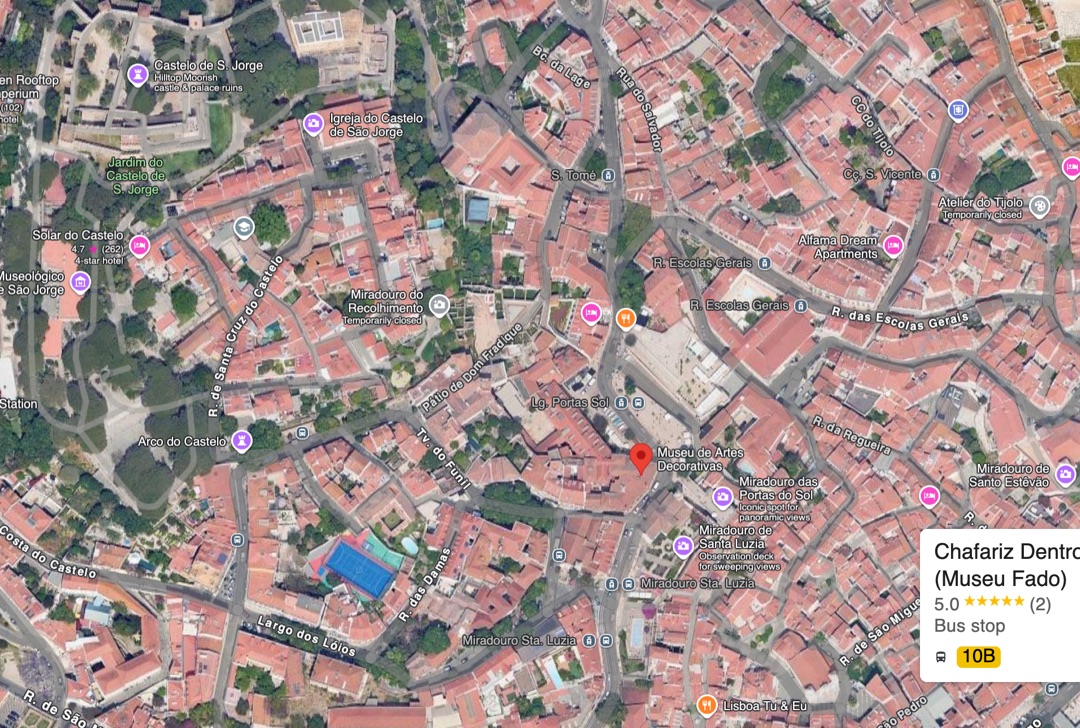
Back on the tram 28 again with no itinerary, the weather still radiant, we got off  at the Plaza of the Church of Santa Lucia perched on the Miradoura das Portas do Sol–Viewpoint of the Door of the Sun.

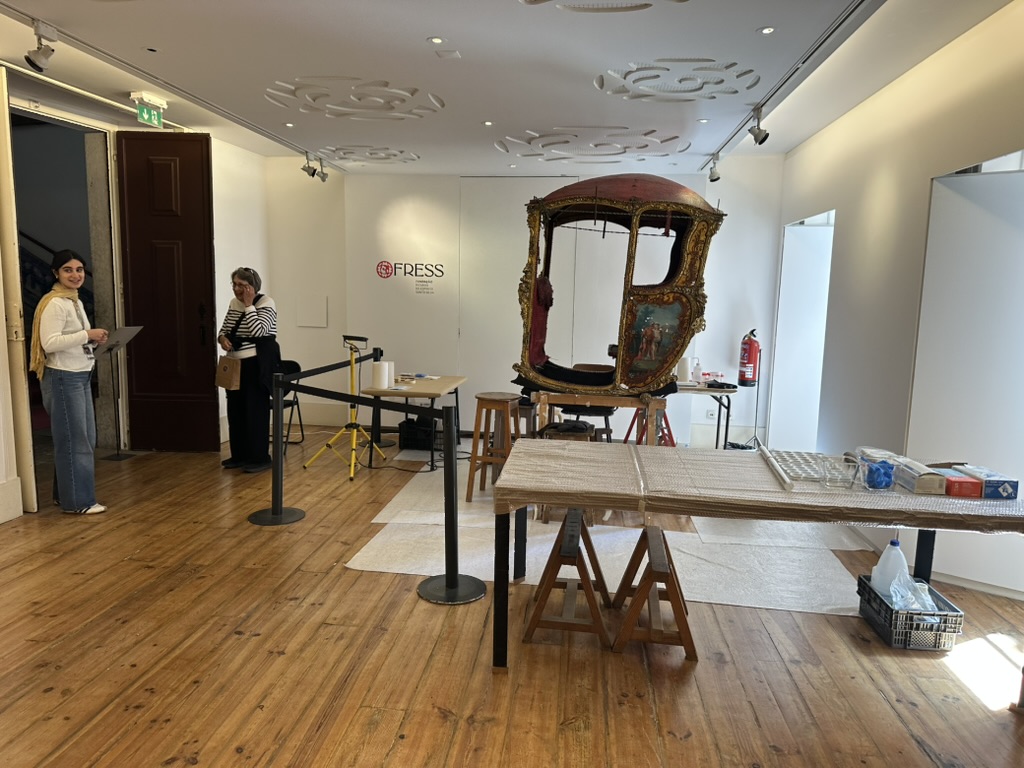
Across the tram track was a museum of decorative arts that interested Jan and appealed to me for its lack of traffic. We mounted the empty staircase of a stately old palace at the top of which sat the canopy of a 17th century carriage under repair by restorers of antique treasures.

They and their apprentice artisans at school in the museum were absent for the day, and other than a couple of elegant young women attendants, the whole place was deserted.

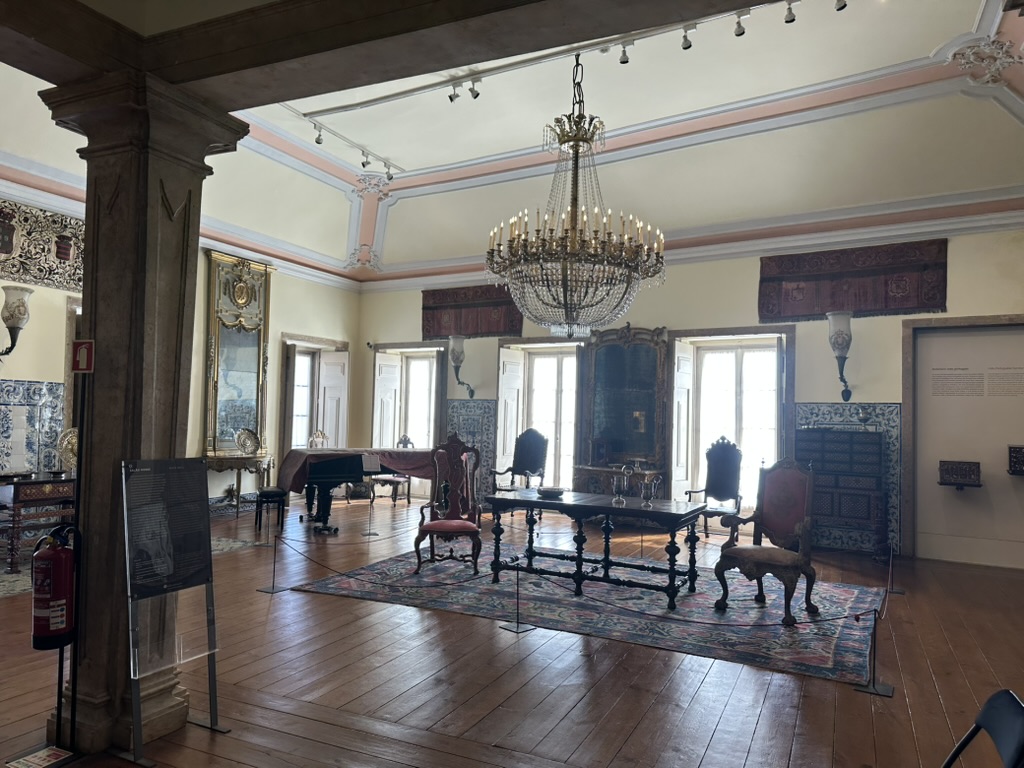
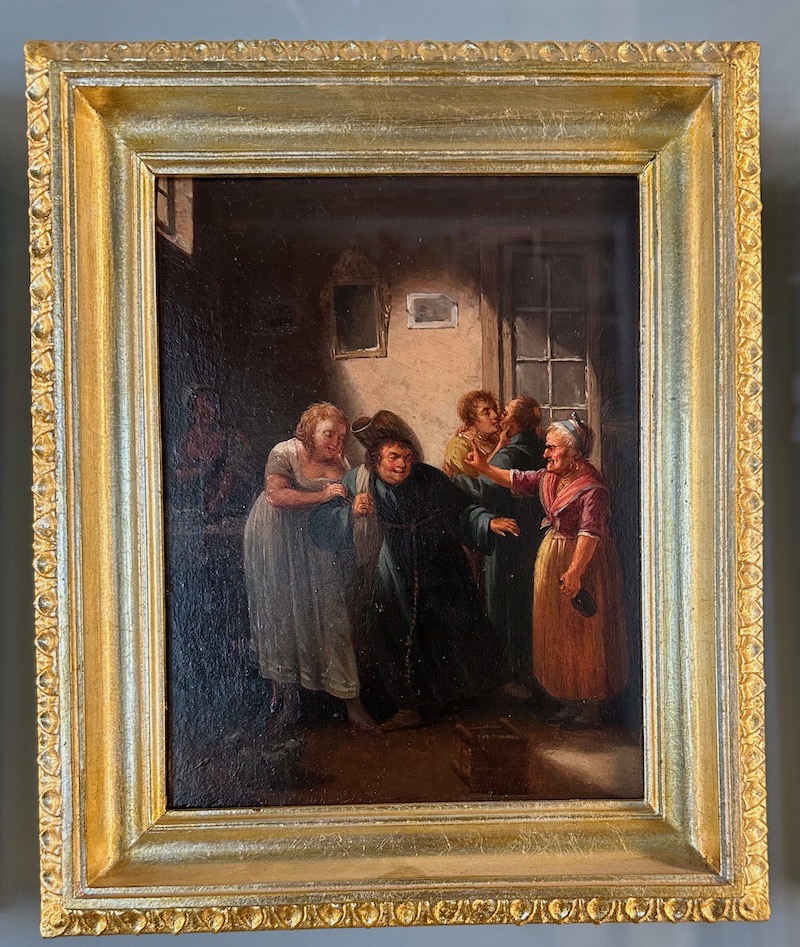
Among the solemn royal furnishings I was amused by two small paintings of “Friars in a Bordello.”

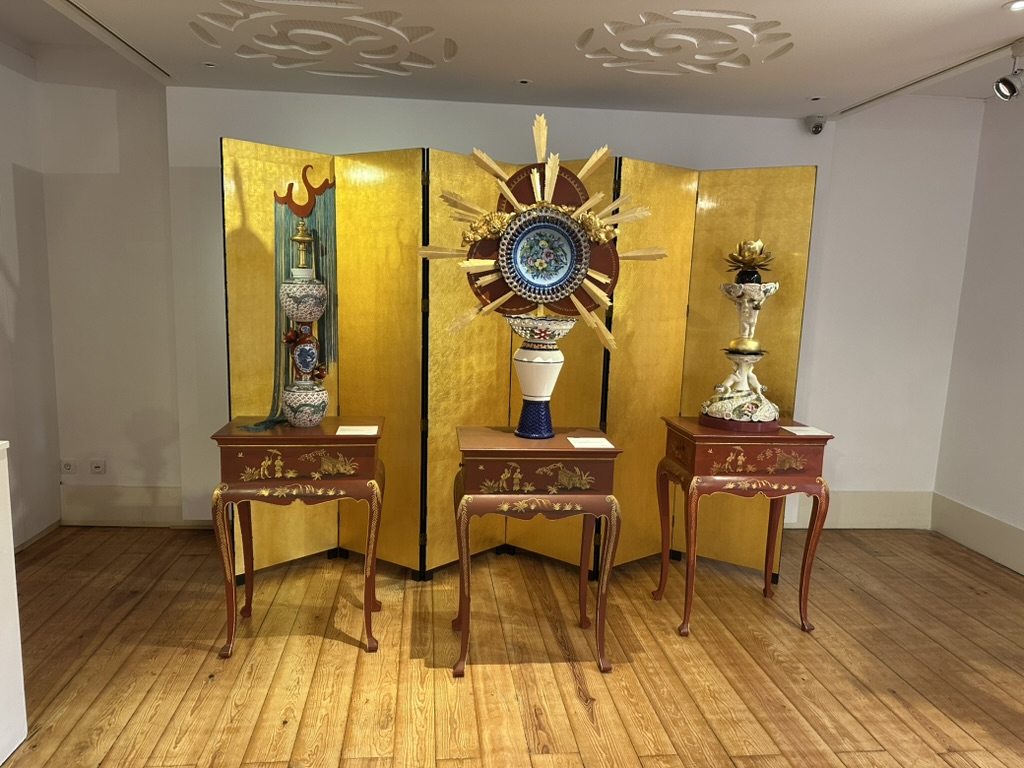
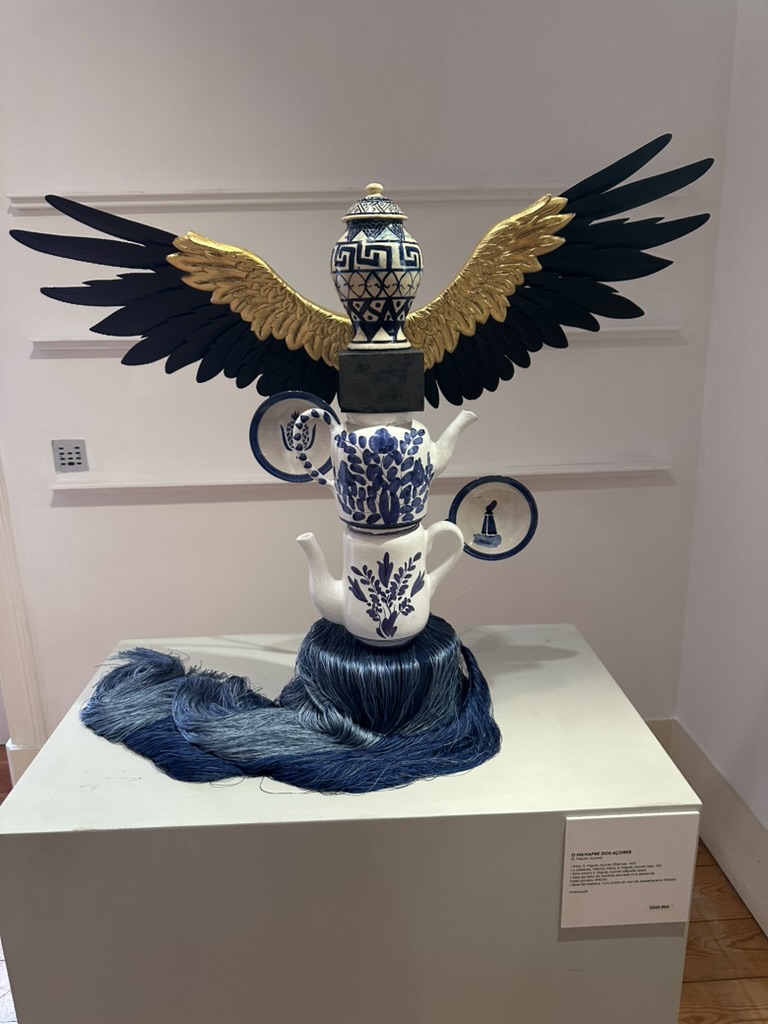
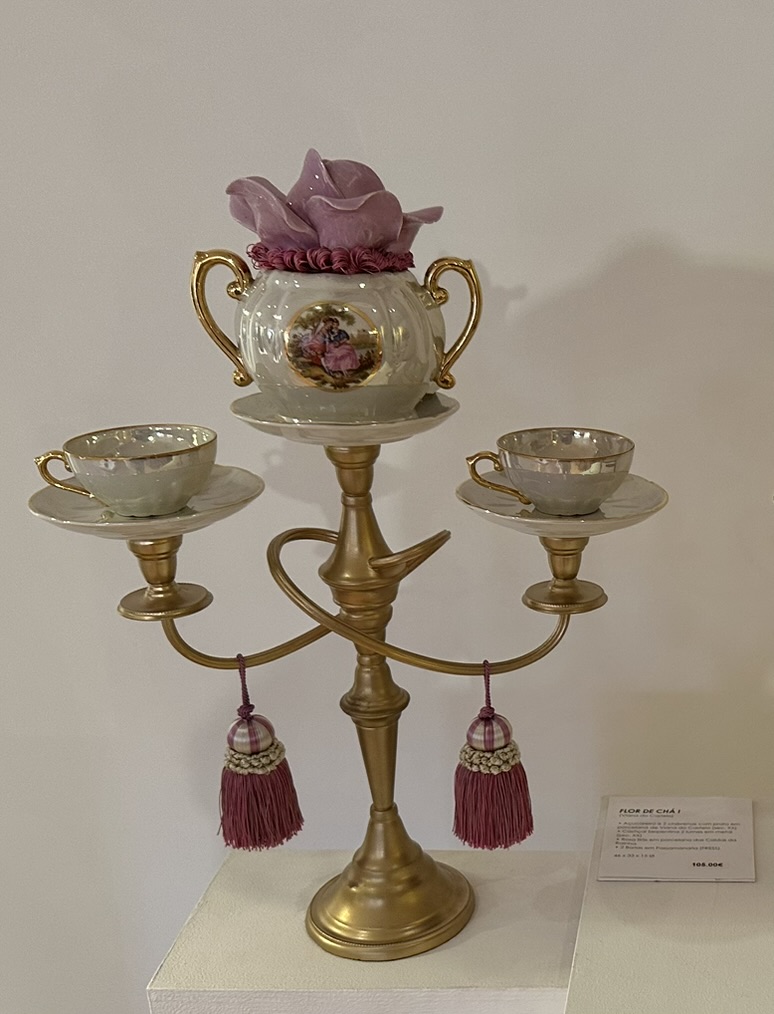
At the gift shop, everything except a tiny xmas ornament Jan purchased was too expensive.  But at a gallery to the side of the carriage canopy we found a display of student work—original creations applying techniques of the earlier artifacts with a contemporary twist–that were listed with prices.

I couldnt resist asking if the one listed for 150 Euros could be shipped.

The attendant said yes and took my order.

Back at Largo Intendende we crossed the square to the building labelled Casa Independente, a hip arts and dance club of former glory where the music started  at 11:00 p.m., much too late for us.

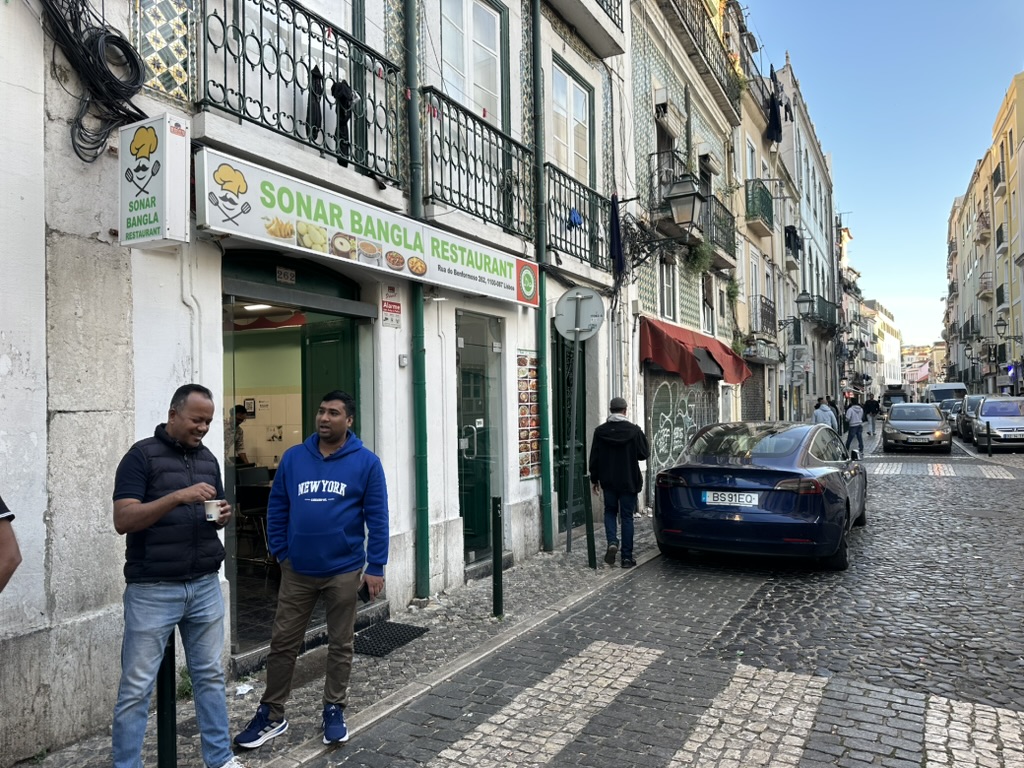
For dinner we ventured down the street at the back of the square densely occupied by East Indian immigrants. The Bangladeshi restaurant food was disappointing but very inexpensive.

Portugal Day 5

April 27th, 2026

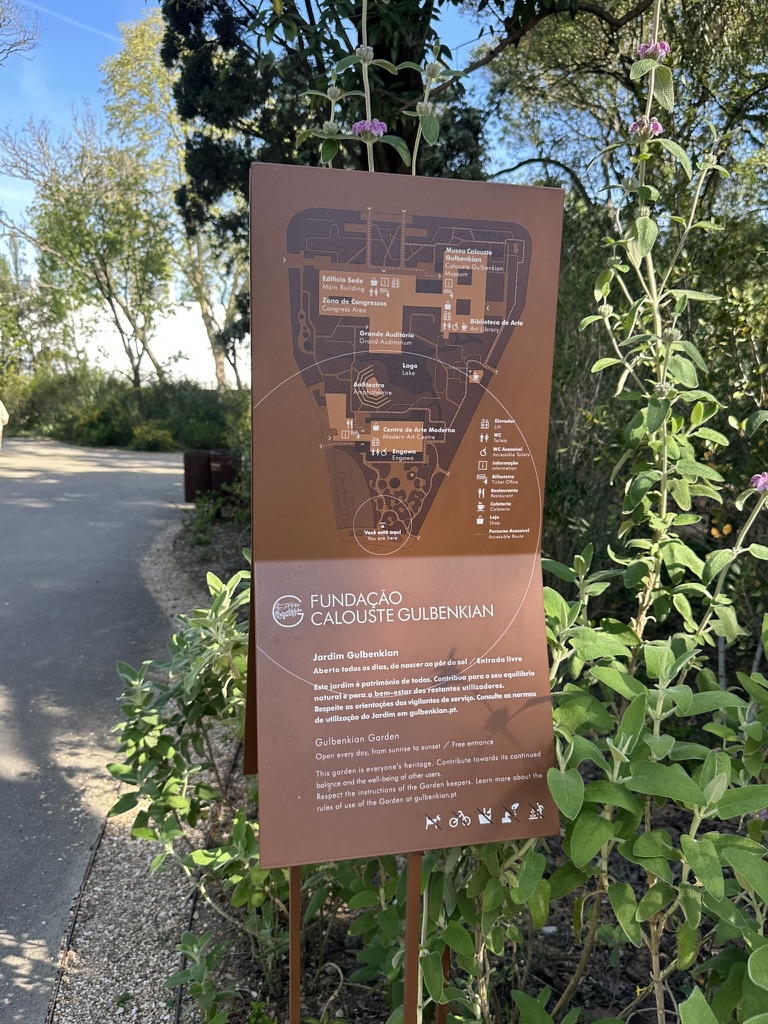
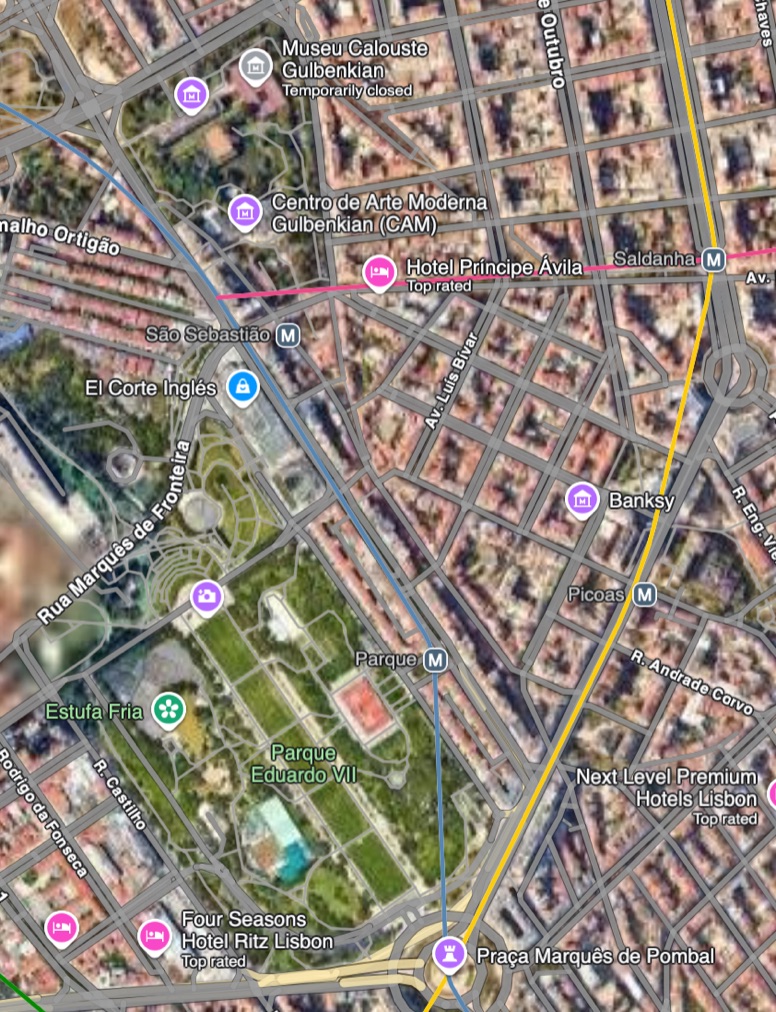
This morning Jan suggested we go to the Gulbenkian Museum and Park, known for its collection of art masterpieces traditional and modern, a facility funded by an Armenian immigrant oil billionaire in gratitude for Portugal’s offer of protection from the Nazis during World War II.

The traditional museum was closed for renovations and the modern one was closed on Sunday, but it was worthwhile to see the spacious modern section of the City where it was located: 20th century buildings, grafitti-free streets, a locked up two story shopping mall with ads for stuff you see in airports.

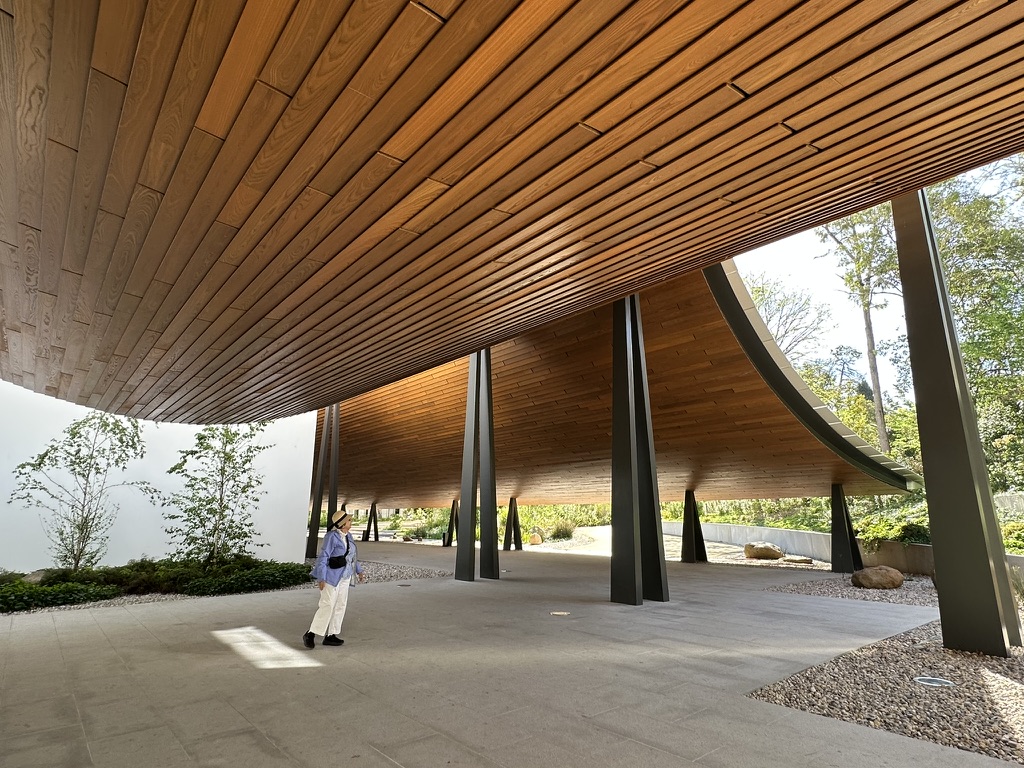
We entered the park surrounding the buildings under a curved stained wood portico of modern Japanese design.

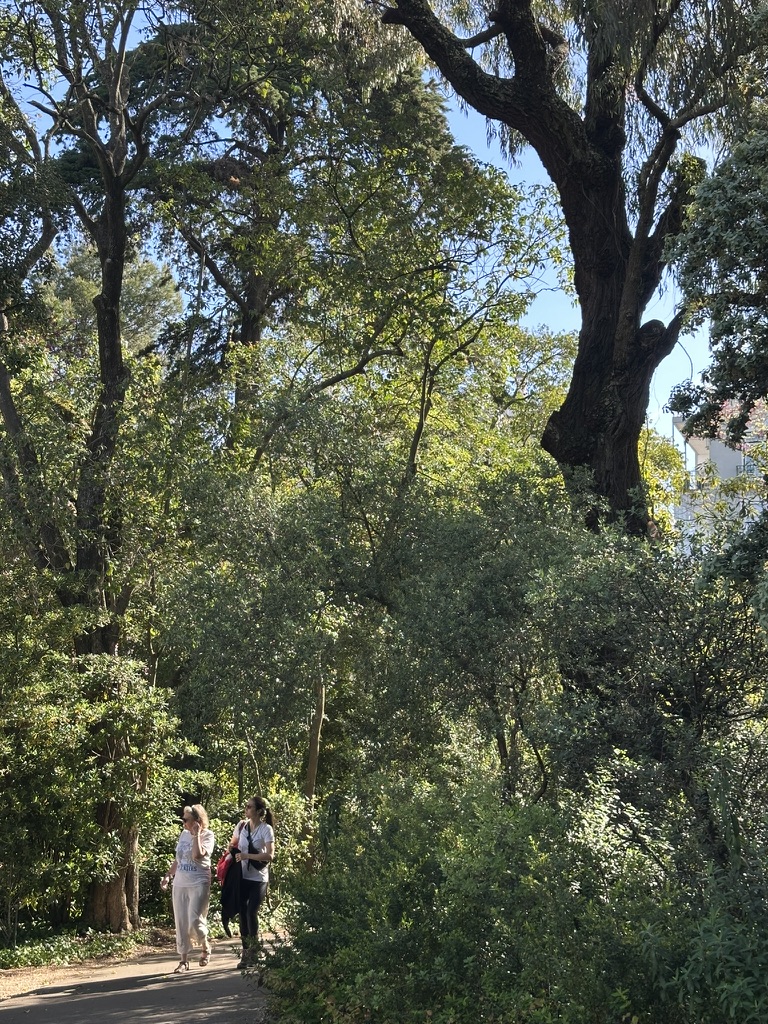
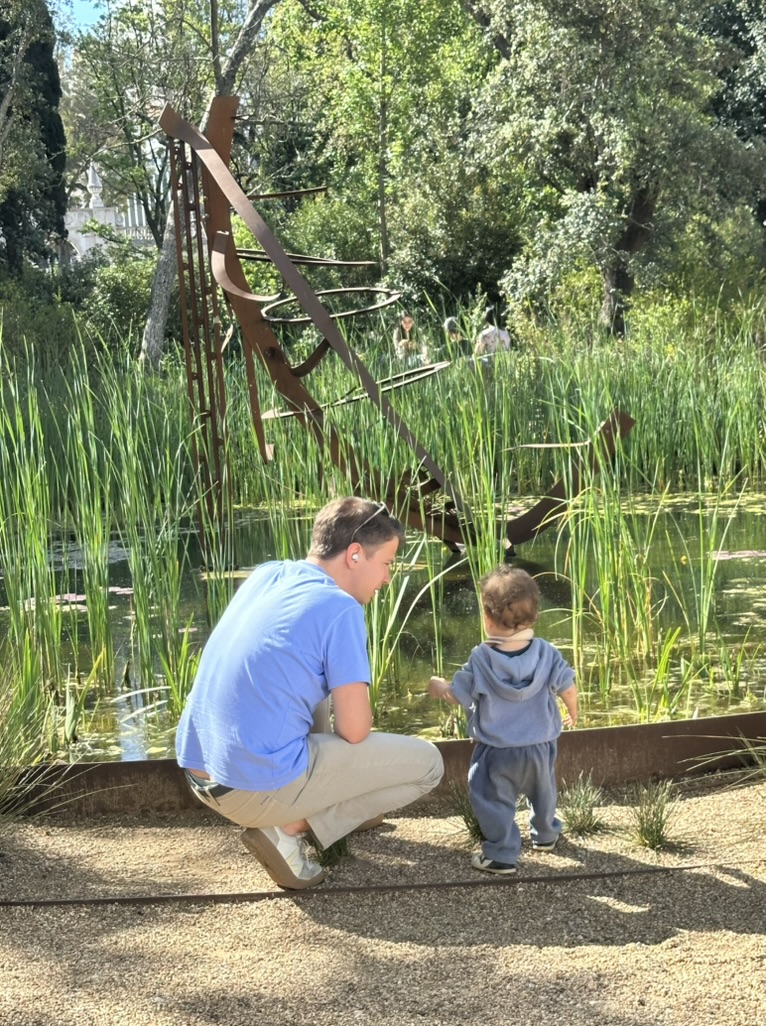
The garden is immaculately tended, large mature trees of many species just coming into light green translucent leaf, fountains, gracefully curved walkways, inviting benches, only a few people and children quietly strolling.

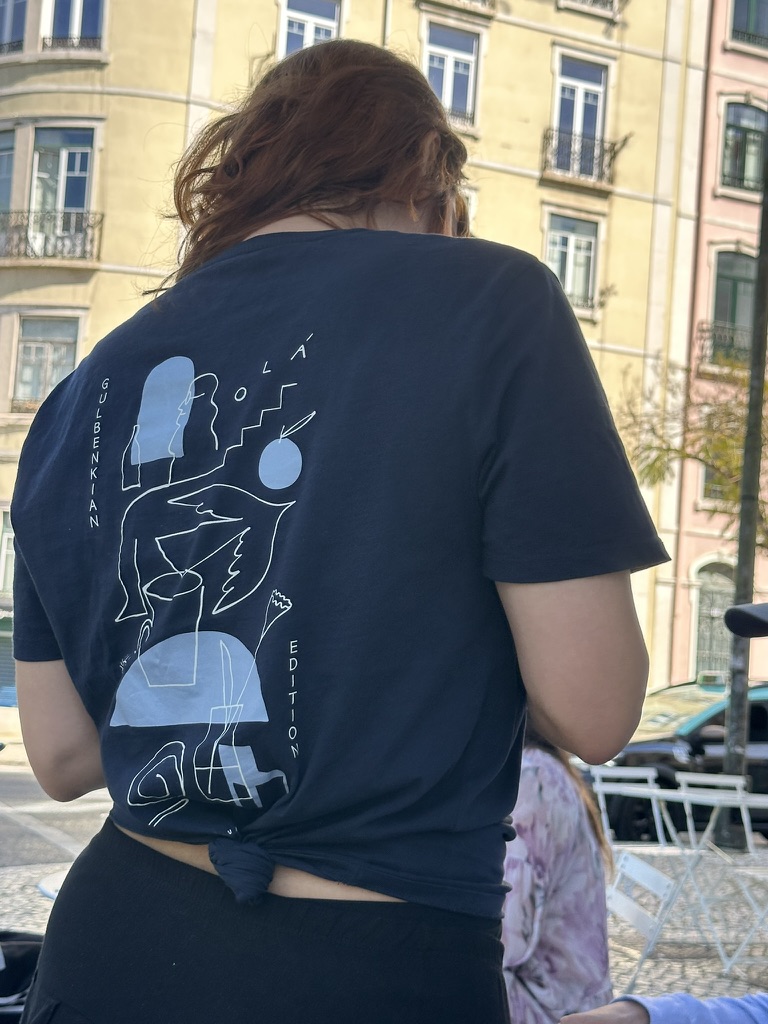
After an hour we exited the park and stopped at a elegant café where waitresses wore artistic t-shirts,

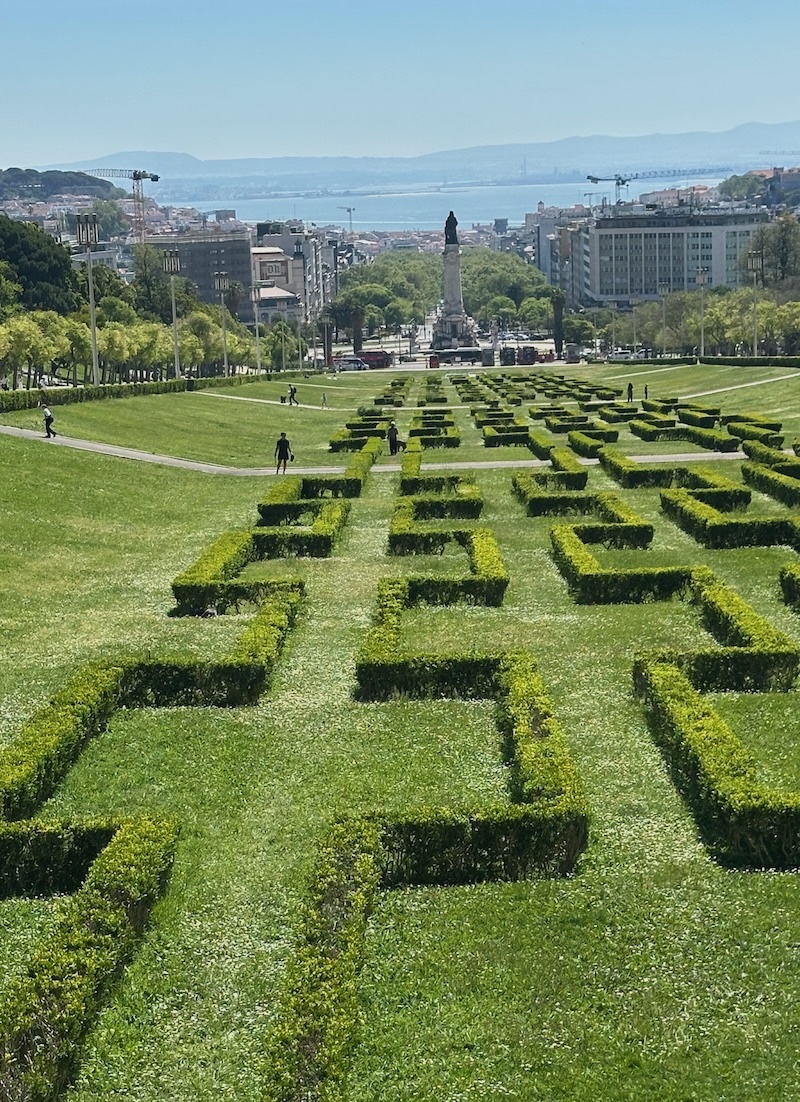
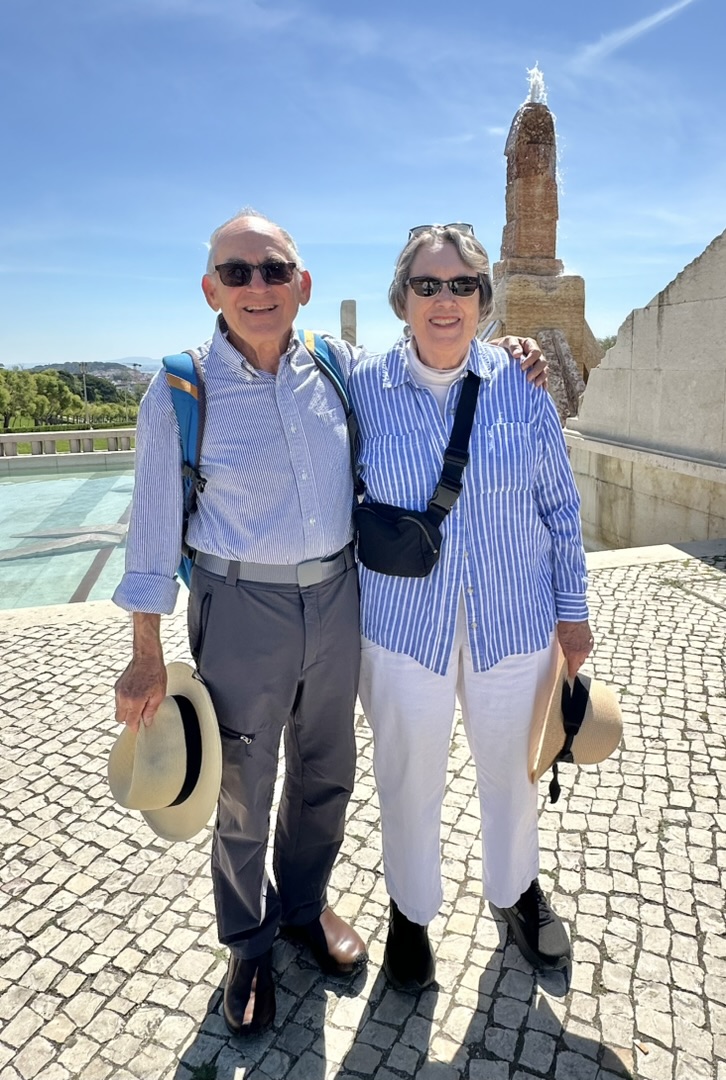
and then uphill to the Edward VII park,  another contrast to the funky beauties of the old town,  a formal garden extending down to the riverside miles away.

The fountain seemed a bit incongruous.

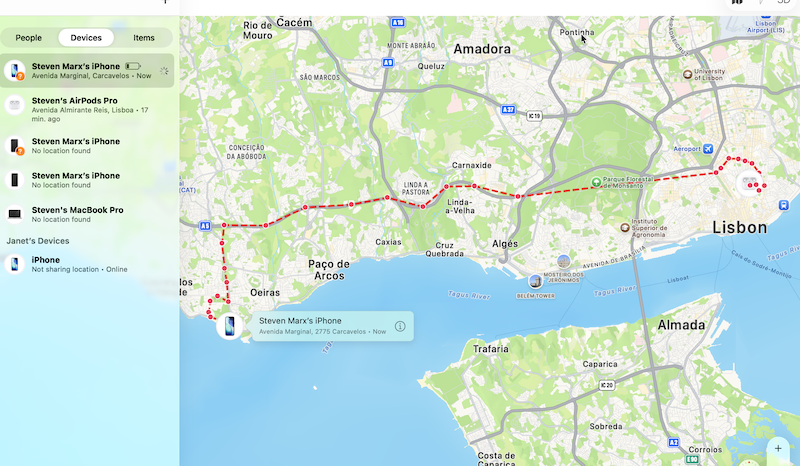
Within minutes of arriving back at the hotel by Bolt I realized my phone was gone, most likely having fallen from my pocket upon leaving the car. “Where’s my iphone” on the computer told me its location at an address near that point. I dashed back out, looked along the sidewalk and approached every shop and café keeper nearby to try to locate the number.  A tall dishevelled fellow came up and insisted he knew where it was and that I accompany him down the street. I pulled away from him and entered a little halal butcher shop next to the mysterious address, where a young clerk told me that it was behind an adjacent unmarked locked gate. I concluded this was a false lead.

Back at the computer in our room the robot tracked the phone moving from where I left the Bolt out into the suburbs.  It was still in the car.  I repeatedly called my phone with Jan’s. Eventually the driver answered it and said he would bring it to me later.  But as I tracked the phone’s travels all over the map I got more anxious.

Jan convinced me to go to the Lisbon artifact shop facing the square, “A Vida Portuguesa,” to practice “Sardine Therapy” by choosing from the hundreds different packages of fish.

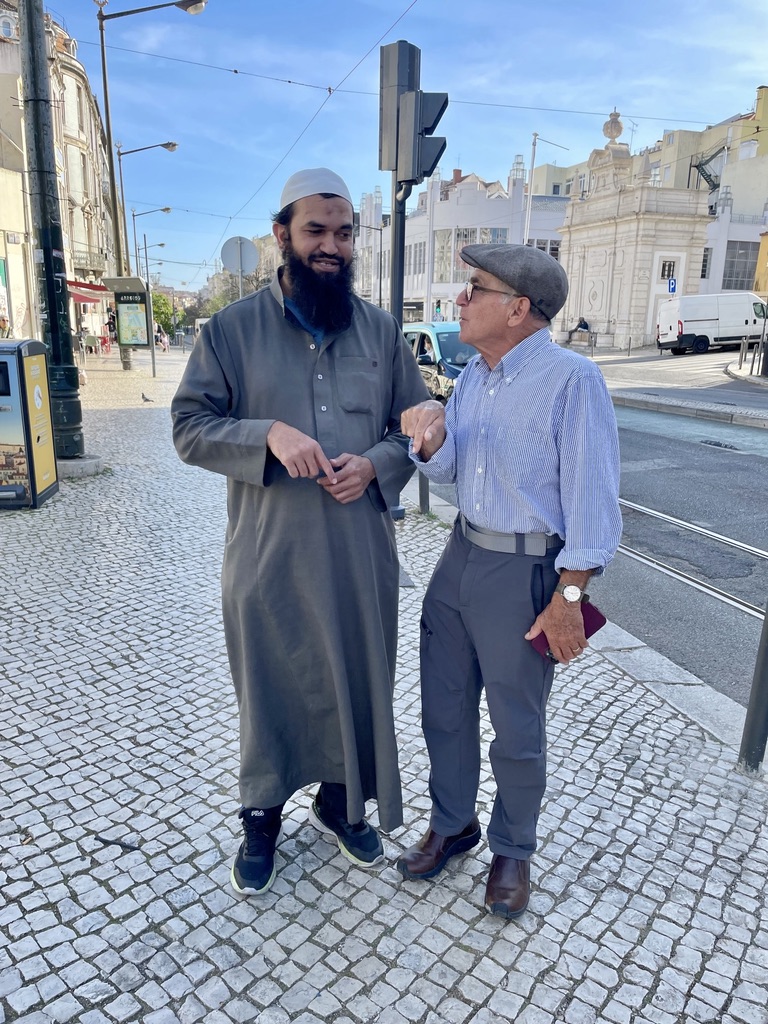
Three hours later, the Bolt driver called her phone at the number I’d left, said he was nearby and asked where should I meet him. Down in the street Jan and I saw him approach, dressed in a priest’s robe and hat. I restrained my impulse to hug him but gave him a 20 Euro reward.

Portugal Day 6

April 27th, 2026

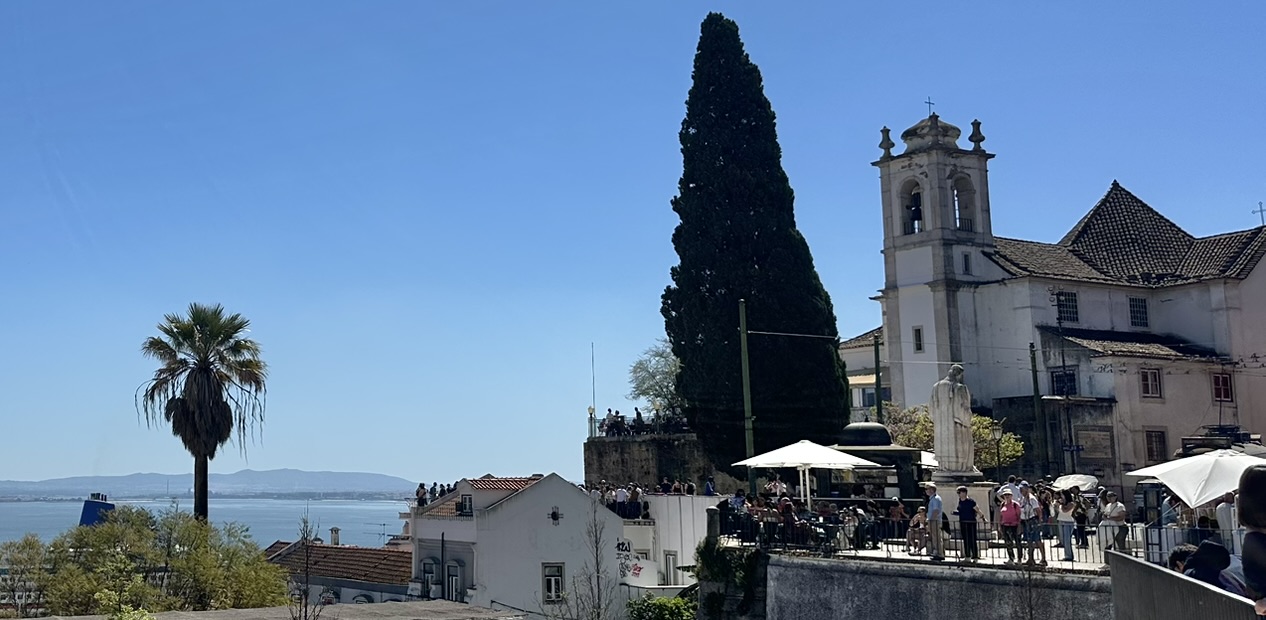
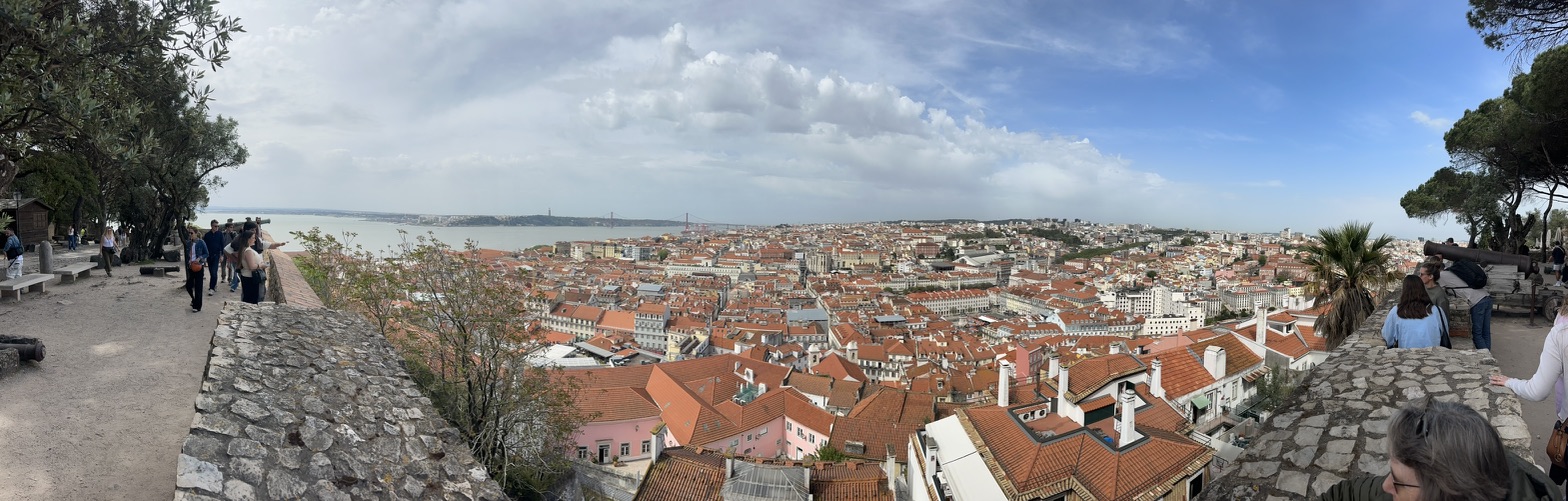
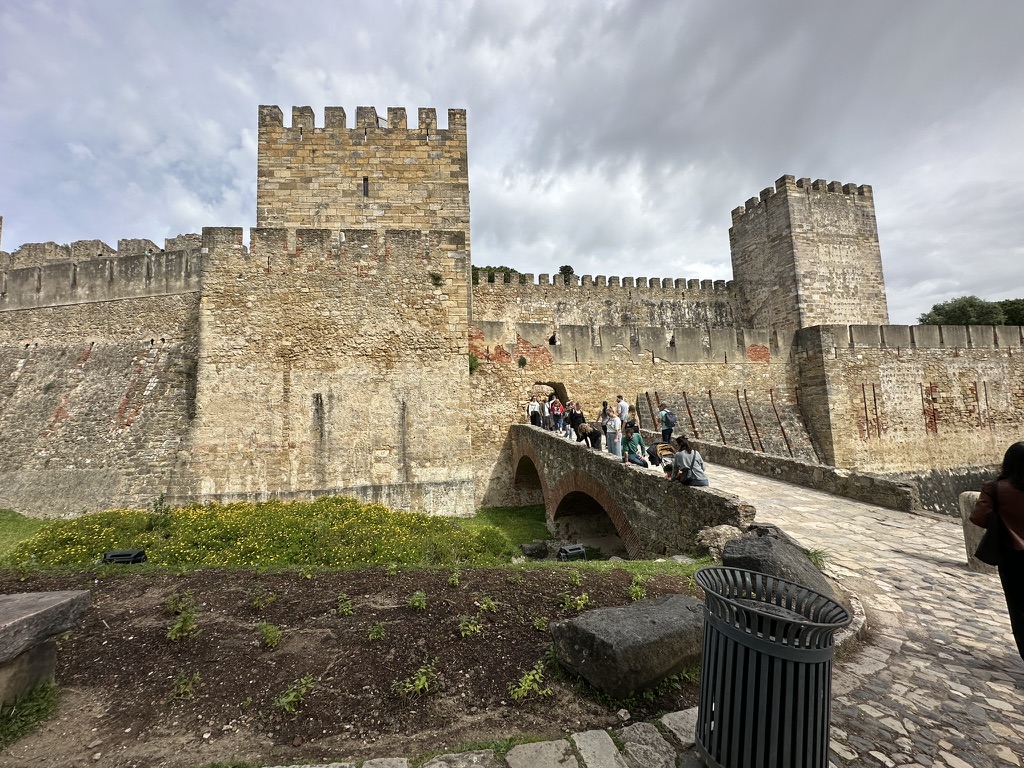
Another blue sky day. we took tram 28 to visit the St. George Castle, the most prominent landmark in the City. From the Miradoura das Portas do Sol overlook we slowly ascended  steep steps to  the  entry.

The spot was occupied by the Phoenicians during the 8th century B.C. and from 4 B.C. was a strategic  Roman stronghold.

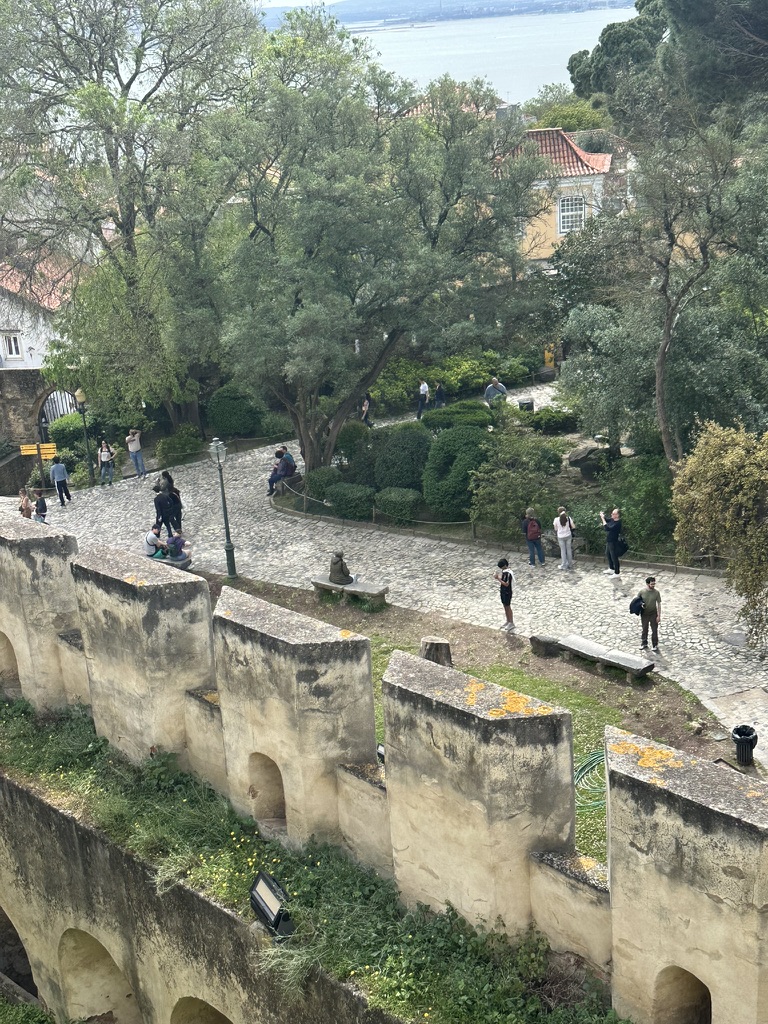
We walked along the lower ramparts looking down at features of the City which by now had become recognizable.

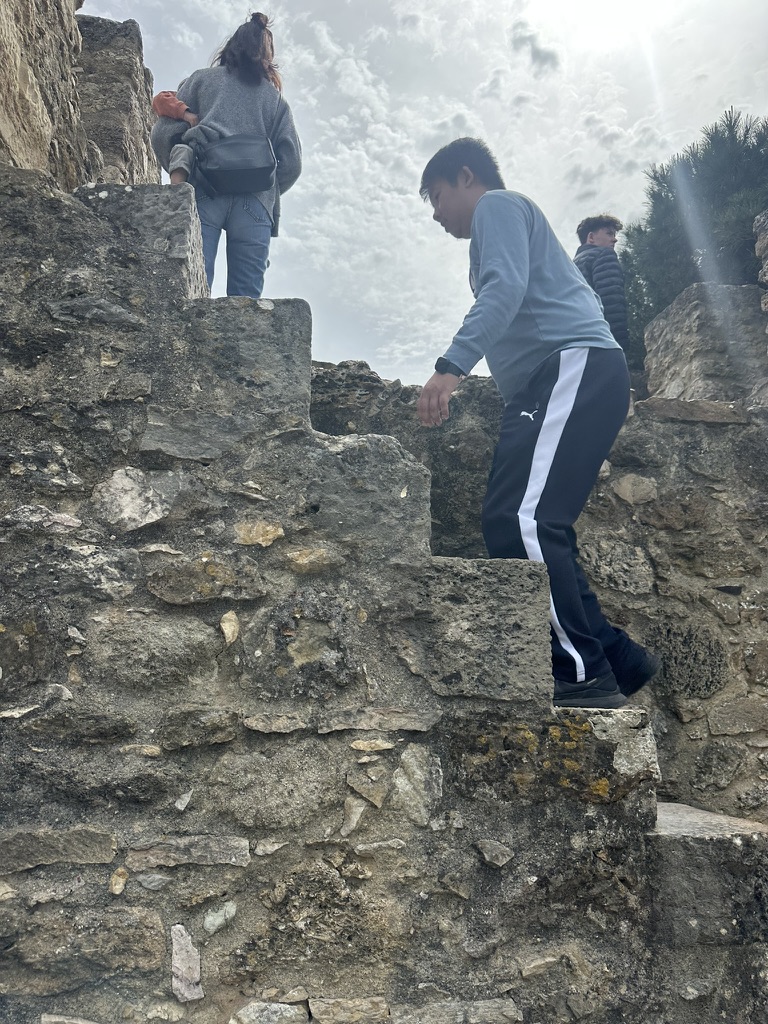
I ascended to the upper walls of the citadel feeling shakier than I expected.

from which I could see the lower fortress

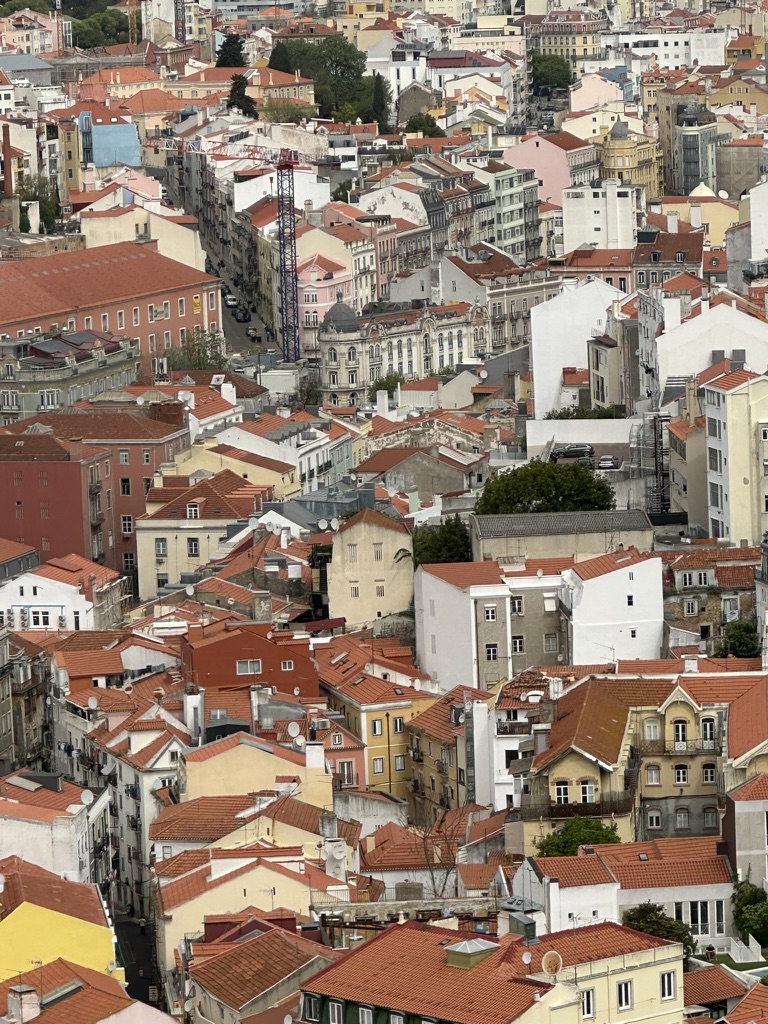
and our hotel in the narrow valley below.

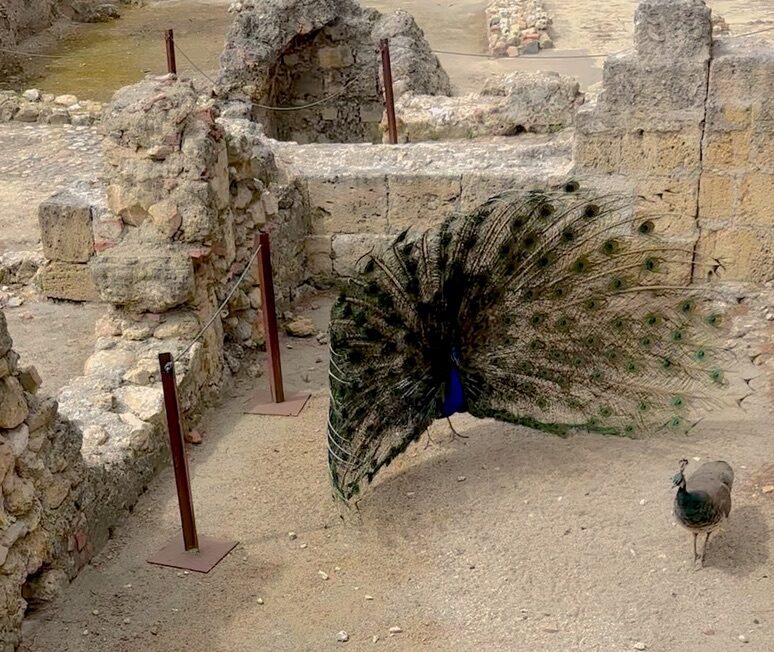
We visited the archaelogical museum and excavation on site, where a male peacock courted an indifferent female.

Jan had purchased a two hour sunset tour of the Tagus estuary on a traditional sailing boat scheduled for that evening, but the weather turned unfriendly. Watching the mast rock under sporadic showers most of the other passengers didnt want to proceed.  After a disagreement with the young guide, the boat owner offered credit for another trip when the weather improved.

Portugal Day 7

April 27th, 2026

Jan found a laundromat where we could wash our first week’s worth of clothes.

We reached it up the steep hill on the opposite side of the Largo Intendente valley

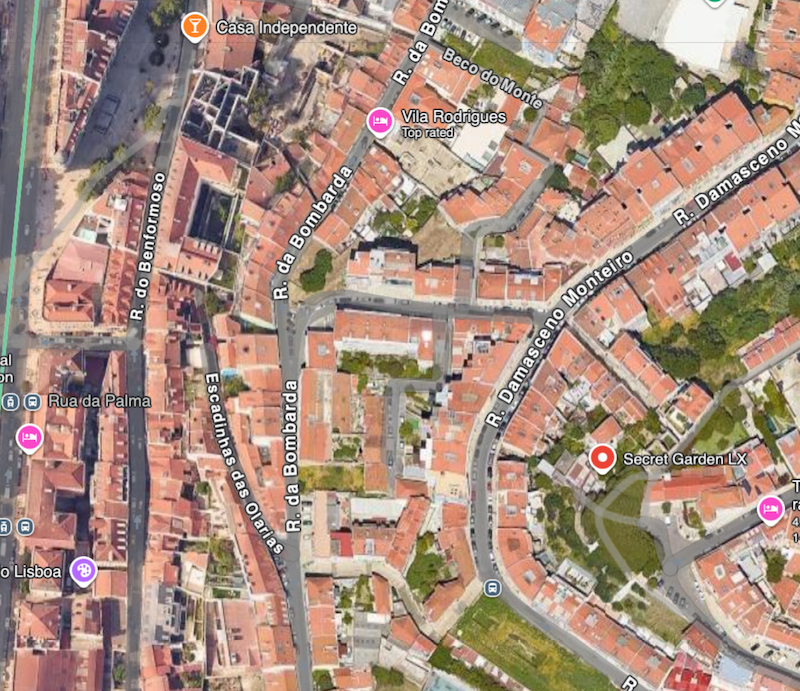
which offered a view of Secret Garden tucked under the Miradouro Senhora do Monte.

After lunch I hiked beyond the laundromat to another hilltop area where elegant buildings like  the Goethe Institute

were interspersed among shabby ones

In front of an imposing classical facade I saw a a strange looking monument.

An explanation was posted on Google Maps

Back at he hotel Jan and I prepared to attend a concert at Clube de Fado. Performed in a cellar, supposedly one of the first early 1900’s Fado venues, the music was preceded by a fine fish dinner.

The place was packed and loud, but when the lights went down it got silent. The traditional trio of musicians—vocalist, Portuguese guitarist, Spanish guitarist — took places in a tiny performance space.  The virtuousity, immediacy and power of the first set brought tears to my eyes.  Alas the set was only fifteen minutes long.

The three of them departed, and the lights went up. Twenty minutes later the instrumentalists returned with a young male vocalist.

That set  was followed by an instrumental set highlighting the Portuguese guitar.

Next was a female singer who expressed the traditional Fado blend of beauty and pain

Four more sets were scheduled for that night, but we didn’t have the stamina to wait out the intervals. We paid the reasonable bill—about 65 euros for dinner including a full bottle of wine.  I expressed my gratitude to the musicians during the interval at the bar outside the dining room.

It turned out that the Portuguese guitarist had lived in San Jose California, where he worked at an IT company and played at the City’s Fado clubs.